
More reasons to enroll early: Save $250 on tuition + 50% off your deposit. Enroll by Oct 31.
Dissect a sheep brain and design a research-based neurological treatment plan in this 3-week program for high school students on Yale University’s campus.
Rated 4.3 out of 5 for overall experience by students surveyed across the broader program in 2026.
Course Description
A change in movement or memory can offer a clue about what is happening in the brain. Follow the connections from structure to function, then ask what a treatment would need to address.
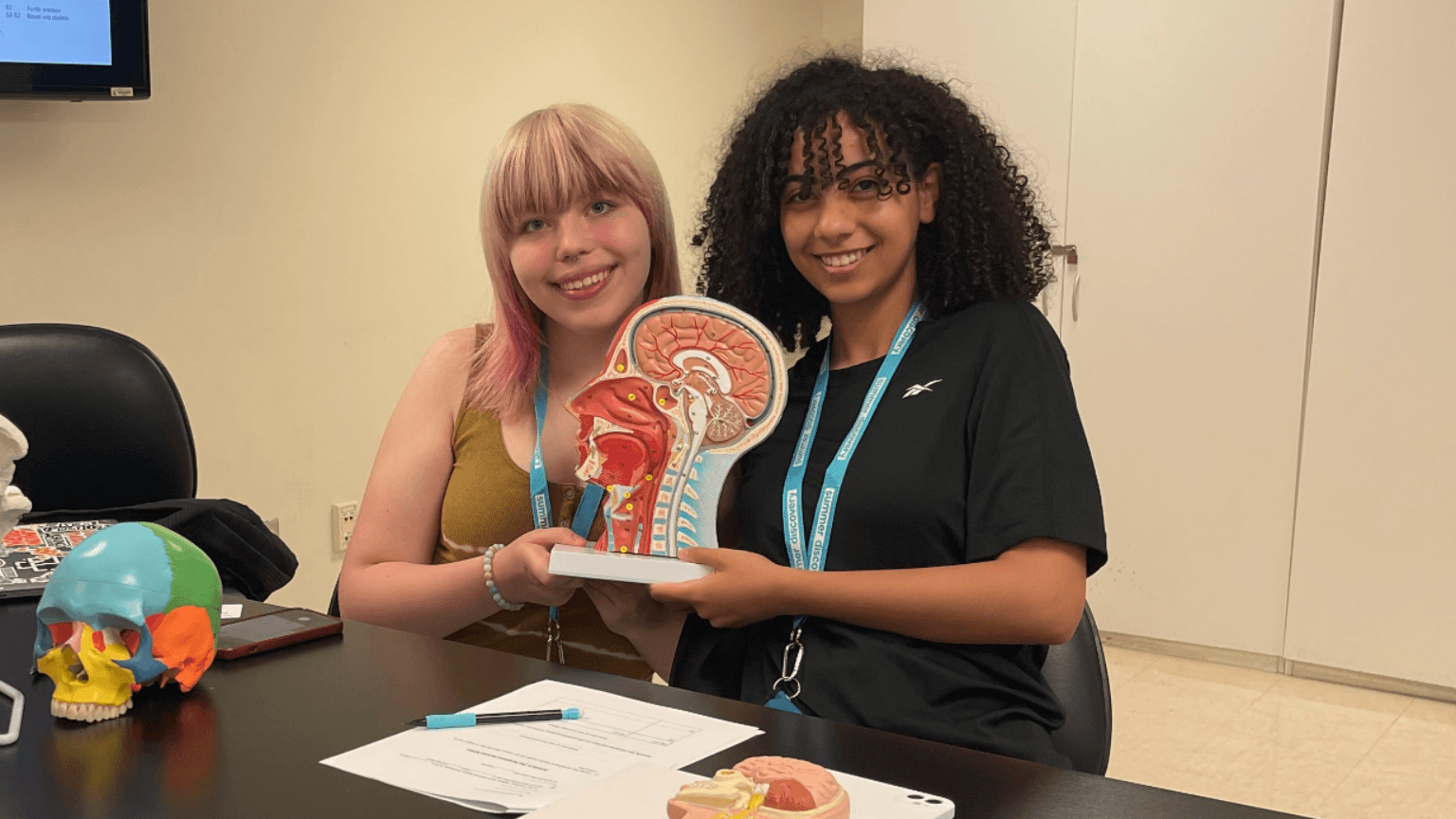
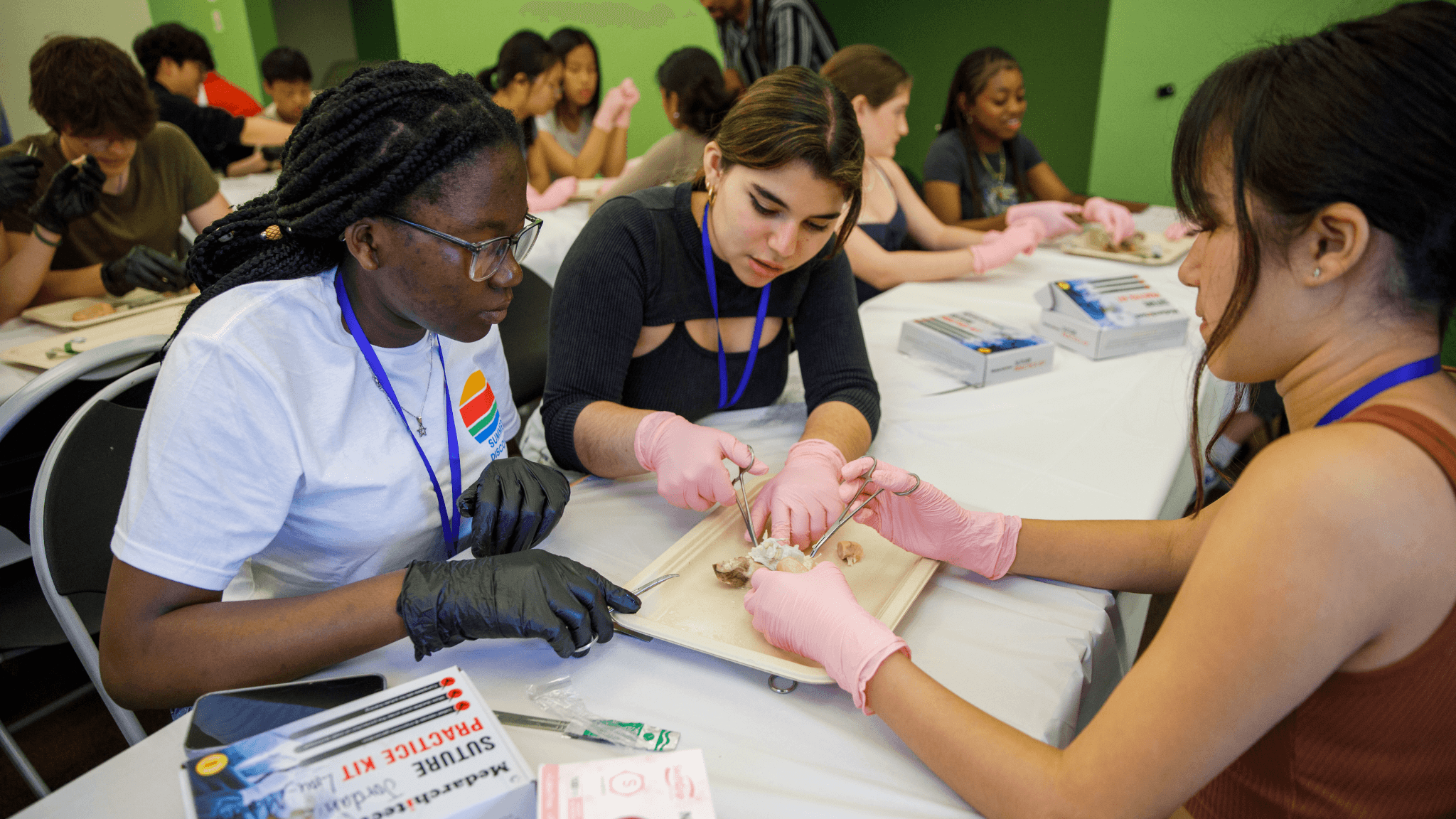
In this course you will identify major brain regions through models and a guided sheep-brain dissection. Sensory, motor, and cognitive experiments connect anatomy with behavior you can observe.
Clinical cases examine disruption from trauma, neurodegenerative disease, cancer, and other conditions. Compare the evidence linking symptoms with affected systems, alongside emerging approaches in artificial intelligence, genome engineering, and new therapeutics. A promising treatment claim still needs an account of its limits.
For your capstone, design a research-based treatment plan for a neurological condition or improve an existing protocol. Evaluate scientific sources, explain the biological target, and organize a course of care. Presenting the plan asks you to defend its reasoning and distinguish established knowledge from an emerging possibility. It’s an academic way to investigate clinical questions and test your interest in further neuroscience study.
This three-week course for high school students is part of Summer Discovery’s Institute for the Gifted program on Yale University’s campus in New Haven, Connecticut. Residential and commuter options are available.
What You Will Do
• Identify major brain regions and explain their functions
• Complete a guided sheep-brain dissection
• Run sensory, motor, and cognitive investigations
• Connect neurological symptoms to affected structures
• Evaluate emerging therapies and research evidence
• Design and present a treatment plan for a neurological condition
Learning Outcomes
By the end of the course, students will be able to:
• Analyze major brain structures and connect anatomy to function
• Use experimental and clinical evidence to explain a neurological condition
• Design and defend a research-based treatment or recovery plan
You’ll leave with your neuroanatomy notes, experimental observations, capstone treatment plan, and a certificate of completion.
Why Neuroscience Skills Matter
Neuroscience asks students to connect evidence across scales, from cells and anatomy to behavior and clinical symptoms. Dissection builds spatial understanding, while sensory and motor experiments show that brain function can be investigated through careful observation.
Treatment design requires students to evaluate sources, distinguish established knowledge from emerging research, and explain why an intervention fits a biological mechanism. Those habits strengthen scientific literacy, ethical judgment, and communication for future study in biology, psychology, medicine, engineering, or data-driven health fields.
Who Should Attend?
For students who have completed 9th, 10th, 11th, or 12th grade.
If you’re interested in how the brain’s structure connects with disease or injury, this course gives you anatomy and a substantial independent project to explore. Biology, psychology, medicine, and biomedical engineering all offer ways into the work.
Expect a supervised animal-organ dissection, scientific reading, and discussion of disease and injury. Experience with biology is helpful preparation.
Institute for the Gifted eligibility requirements apply; see the program FAQ.
Recommended by Nearly 9 out of 10 Students
Based on students surveyed in 2026 about Summer Discovery programs at Yale University campus.
Your Summer at Yale University
The Institute for the Gifted program takes place on Yale University’s campus in New Haven, Connecticut.
The campus’s courtyards, architecture, libraries, and academic spaces create a vivid setting for learning beyond a familiar school environment, while New Haven’s connections to law, theater, science, and the arts extend that context into the city. Students learn alongside peers with similar interests, navigate campus life, and gain independence through everyday choices. The experience creates space to deepen an interest, test it in a more advanced setting, and consider what they may want to study or pursue next.
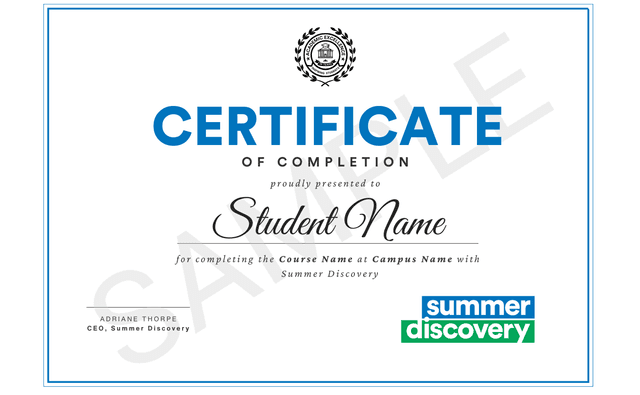
Summer Discovery Certificate of Completion
After successfully finishing this course, you will be awarded a certification completion for your accomplishment.
*This is a preview, not what you will receive