
More reasons to enroll early: Save $250 on tuition + 50% off your deposit. Enroll by Oct 31.
Build and deploy an AI application in this 3-week program for high school students on Yale University’s campus.
Course Description
An AI model can give a confident answer and still get something wrong. Build the system, test its behavior, and find its limits.
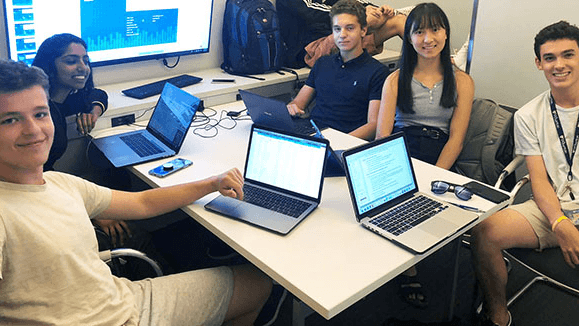
In this course you will learn Python through talks, whiteboard activities, demonstrations, and coding labs. Train decision trees and audit bias. Build an image classifier using neural networks and computer vision; saliency maps reveal what influences its output.
Explore multimodal systems, natural language processing, word embeddings, and semantic search: ways to combine inputs and find meaning in text. Large language models and prompt engineering lead into a tool-calling agent that takes defined actions.
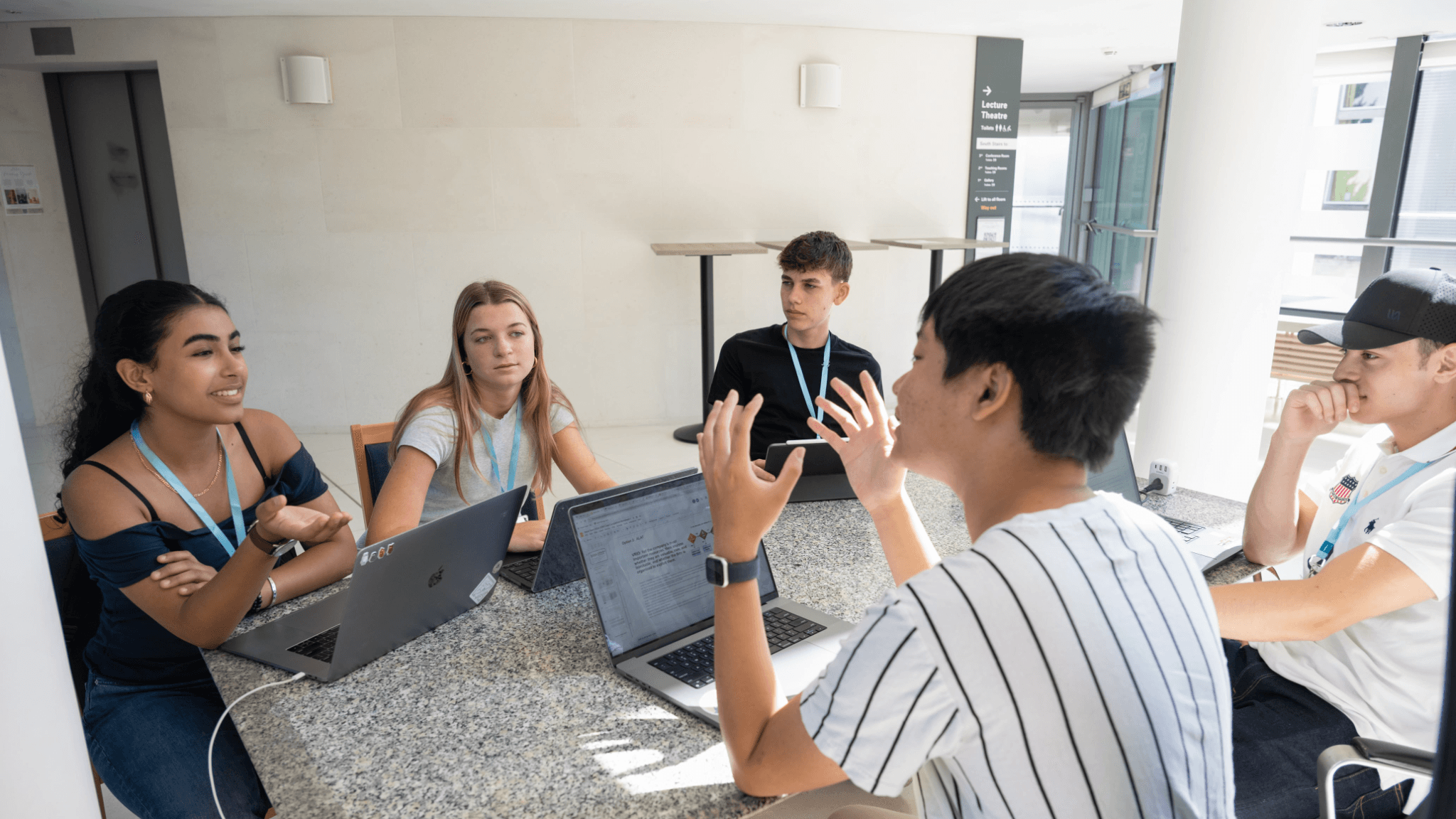
Small groups choose an AI for Social Good problem, while each student builds and deploys a custom app. Explore data, train and evaluate models, and revise with ethics in mind. Workshops on AI research and responsible communication support your work. At Demo Day, present the live application and explain what the tests show, including where it falls short.
This three-week course for high school students is part of Summer Discovery’s Institute for the Gifted program on Yale University’s campus in New Haven, Connecticut.
What You Will Do
• Use Python to explore and manipulate a real-world dataset
• Train a decision tree and conduct a bias audit
• Build and stress-test an image classifier
• Explore embeddings, semantic search, and prompt-engineering strategies
• Create a tool-calling AI agent and application workflow
• Build, deploy, and present an AI for Social Good app
Learning Outcomes
By the end of the course, students will be able to:
• Train and evaluate introductory machine-learning models using Python
• Explain how tools, data, and constraints shape an AI application’s behavior
• Use test evidence and ethical reasoning to support AI design decisions
You’ll leave with your live AI application, project presentation, and a certificate of completion.
Why AI Literacy Skills Matter
Building AI requires students to understand what happens between data and output. Training, testing, evaluation, and interpretation show why a model can appear accurate while still failing on important cases. Bias audits make the consequences of data choices visible.
Application design adds responsibility. Students define a useful problem, select tools, consider security and ethics, and test whether the system serves real people. These skills combine coding with research, communication, and judgment, foundations that matter across fields increasingly shaped by AI.
Who Should Attend?
For students who have completed 9th, 10th, 11th, or 12th grade.
If you want to look inside the AI tools you use and try building your own, this course connects coding with real questions about data and responsibility. Interests in images, language, product design, or social-impact technology can give your project a direction.
Expect hands-on Python, model testing, teamwork, and repeated debugging. Optional preparation materials cover Python and AI basics.
Institute for the Gifted eligibility requirements apply; see the program FAQ.
Recommended by Nearly 9 out of 10 Students
Based on students surveyed in 2026 about Summer Discovery programs at Yale University campus.
Your Summer at Yale University
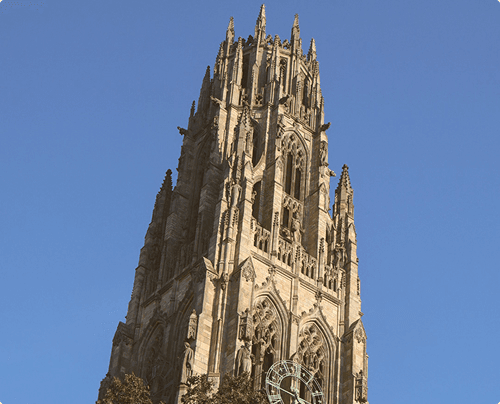
The program takes place on Yale University’s campus in New Haven, Connecticut.
The campus’s courtyards, architecture, libraries, and academic spaces create a vivid setting for learning beyond a familiar school environment, while New Haven’s connections to law, theater, science, and the arts extend that context into the city. Students learn alongside peers with similar interests, navigate campus life, and gain independence through everyday choices. The experience creates space to deepen an interest, test it in a more advanced setting, and consider what they may want to study or pursue next.
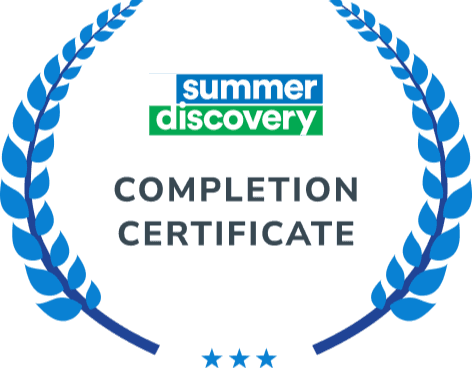
After successfully finishing this course, you will be awarded a certification completion for your accomplishment.
*This is a preview, not what you will receive