
Enroll early for Summer 2027 to secure your preferred campus and program.
Learn to weigh risk, uncertainty, and competing goals in this two-week decision analysis academy for high school students at Dartmouth.
Instructor:

Course Description
An energy decision can look different depending on who makes it. One option may cost less today, another may reduce long-term climate risks, and neither may satisfy everyone. How do you make a defensible choice when the future is uncertain?
In this course you will explore decision analysis, a structured way to examine difficult choices when information is incomplete and goals compete. Using challenges related to energy systems and climate change mitigation, learn to identify decision makers, clarify objectives, generate alternatives, and represent uncertainty with probabilities. Consider how different attitudes toward risk can change the option someone prefers.
Practice turning complicated questions into influence diagrams and decision trees. Compare alternatives using multiple criteria, and investigate expert elicitation: techniques for gathering probability judgments from specialists when reliable data is limited. Discuss how bias can influence those judgments and how to approach uncertain evidence carefully.
During the second week, apply these methods to a real-world energy or climate decision case study. Examine the options through the perspectives of different stakeholders, work through the trade-offs, and develop a well-supported recommendation.
This course is held at both the Dartmouth campus in Hanover, New Hampshire and at the AMC Highland Center in the White Mountains of New Hampshire. Learn more about the course logistics below.
The Highland Center lodge provides a full buffet breakfast and dinner each day. The program will provide lunches. Students utilize shared bathrooms (with showers) and shared bunkrooms, and have access to the lodge’s library, game room, and outdoor areas.
What You Will Do
• Identify decision makers, goals, alternatives, and uncertainties in an energy or climate choice
• Represent uncertain outcomes using probability judgments
• Practice eliciting expert judgments and recognizing potential biases
• Draw influence diagrams and decision trees to compare possible decisions
• Weigh competing objectives and risk preferences using a multicriteria approach
• Analyze an energy or climate case study from different stakeholder perspectives and justify a recommendation
Learning Outcomes
By the end of the course, students will be able to:
• Structure a complex decision by identifying its decision makers, objectives, alternatives, and uncertainties
• Use influence diagrams and decision trees to represent uncertainty and compare choices
• Explain how risk attitudes and competing objectives affect a decision, using a multicriteria method to examine trade-offs
• Practice structured expert elicitation and recognize biases in probability judgments
• Evaluate an energy or climate decision from multiple stakeholder perspectives and communicate an evidence-based recommendation
You’ll leave with an analyzed energy or climate case study and a reasoned recommendation that explains how you weighed uncertainty and competing priorities.
Why Decision Analysis Skills Matter
Important decisions rarely come with a single clear answer. Energy and climate choices can involve long time horizons, major investments, uncertain outcomes, and people who value different results. Identifying the alternatives and uncertainties makes those differences easier to examine rather than leaving them hidden inside an opinion.
Influence diagrams, decision trees, expert judgments, and multicriteria comparisons help turn a complicated question into reasoning that others can follow and challenge. Students practice noticing possible bias, explaining trade-offs, and defending a recommendation without pretending uncertainty has disappeared. These habits support thoughtful work in engineering, environmental studies, policy, business, and other fields where choices affect many people.
Who Should Attend?
For students who have completed 9th, 10th, 11th, or 12th grade.
If you’re interested in energy, climate change, engineering, or how people make decisions with incomplete information, this academy gives you a way to investigate the choices behind those issues. You’ll work with probabilities, diagrams, competing objectives, and stakeholder perspectives, then use those tools in an energy or climate case study.
Come ready to compare different viewpoints, reason through uncertainty, and explain why one approach may be more persuasive than another.
Your Summer at Dartmouth
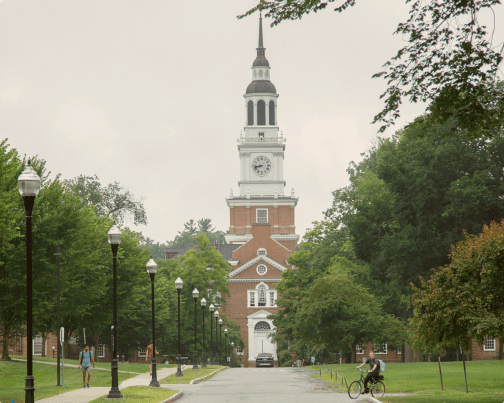
Dartmouth Precollege Summer Scholars gives high school students time to investigate ambitious questions in a focused academic setting connected with Dartmouth in New Hampshire’s Upper Valley. Learning alongside peers with different interests brings new perspectives to discussions and projects.
The shared summer experience offers opportunities for new friendships and growing independence alongside academic exploration. Students can reflect on which questions excite them most and what they may want to study further.
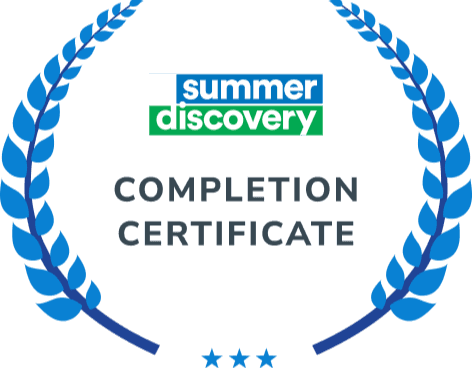
Summer Discovery Certificate of Completion
After successfully finishing this course, you will be awarded a certification completion for your accomplishment.
*This is a preview, not what you will receive