
More reasons to enroll early: Save $250 on tuition + 50% off your deposit. Enroll by Oct 31.
Evaluate well-being research and test evidence-based practices in this two-week Dartmouth psychology academy for high school students.
Instructor:

Course Description
What contributes to lasting well-being, and which popular ideas about happiness hold up under scientific study? Students examine happiness, resilience, and human flourishing through positive psychology, neuroscience, sociology, and behavioral science.
Research discussions, reflective journaling, and experiential activities introduce gratitude, purpose, motivation, relationships, mindfulness, emotional intelligence, optimism, and resilience. Students evaluate evidence, question common misconceptions, and consider how individual habits and social conditions can influence well-being.
As students move between research and reflection, they consider where evidence is persuasive, where questions remain open, and why a practice may not affect every person in the same way. Personal experience becomes something to examine, not universal proof.
The academy connects scientific analysis with thoughtful reflection. Students test evidence-based practices, examine their own values and goals, and communicate psychological concepts without turning one strategy into a universal prescription.
The academy also includes time at Moosilauke Ravine Lodge, Dartmouth’s historic mountain lodge. Shared bunkhouse living and time without Wi-Fi or cell service make the setting an important part of the experience. Students share space, follow common expectations and spend time with their group and the surrounding landscape.
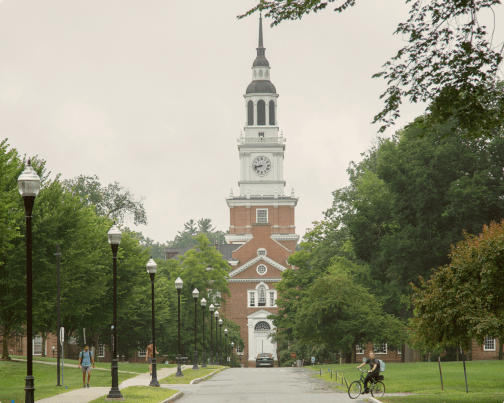
This two-week, full-day intensive academy is part of Dartmouth Precollege Summer Scholars in Hanover, New Hampshire. The academy is fully developed and run by Dartmouth and taught by Dartmouth faculty and expert instructors. The broader experience connects focused academic exploration with campus life, growing independence, and clearer direction about what students may want to study next.
What You Will Do
• Examine major theories and research findings in positive psychology
• Explore gratitude, purpose, motivation, relationships, mindfulness, and resilience
• Evaluate scientific evidence behind common well-being practices and claims
• Challenge popular misconceptions about happiness, resilience, and human flourishing
• Use reflective journaling to examine values, relationships, and goals
• Test selected evidence-based strategies through guided experiential activities
• Communicate psychological concepts using evidence and critical reasoning
Learning Outcomes
By the end of the course, students will be able to:
• Explain major concepts and research findings in positive psychology
• Evaluate evidence supporting strategies for well-being and resilience
• Apply and reflect on selected practices without overstating their effects
Students leave with a collection of research-informed reflections, stronger psychological literacy, and clearer direction about psychology, neuroscience, public health, education, or human development.
Why Positive Psychology Skills Matter
Positive psychology asks students to evaluate well-being with the same care used to study other human behavior. Research helps distinguish a promising practice from a universal claim and reveals how relationships, purpose, motivation, environment, and individual differences can shape results.
Reflection adds another form of disciplined thinking. Students connect evidence with their own observations while recognizing that one experience does not prove a general rule. These habits strengthen psychological literacy, self-awareness, and responsible communication. They are useful in psychology, neuroscience, education, public health, counseling, leadership, and human development.
Who Should Attend?
This academy is for high school students who have completed 9th, 10th, 11th, or 12th grade and are interested in psychology, neuroscience, behavior, well-being, resilience, relationships, motivation, education, or public health. It suits students who want to examine happiness scientifically while also reflecting on personal values and experience.
Participants should be ready to read and discuss research, question popular assumptions, join experiential activities, keep reflective notes, and communicate conclusions carefully. No prior psychology background is stated as a requirement. Openness to evidence, reflection, and perspectives different from one's own will support meaningful participation.
Moosilauke Ravine Lodge is Dartmouth’s historic mountain lodge in the White Mountains. Students sleep in shared bunkhouses with round-the-clock residential supervision. Each bunk has a mattress and pillow, and each student has a designated space for belongings. Students bring their own bedding; a sleeping bag works well. There are no private rooms.
Shared bathrooms are centrally located, with sinks, toilets and showers, and lodge staff clean them regularly. There is no Wi-Fi or cell service. Dartmouth students and recent alumni run the lodge and offer informal mentorship throughout the stay.
Free time can include spikeball, frisbee or soccer on the field, reading or music on the screened-in porch, gathering around the fire pit or wading in the river. Evenings may include movie nights, contra dancing or an ice cream trip to nearby Lincoln. Sharing space, following common expectations and relying on one another make communal living part of the experience.
Recommended by 9 out of 10 Students
Based on students surveyed in the Dartmouth Precollege Summer Scholars program (2026)
Living at Moosilauke Ravine Lodge
Moosilauke Ravine Lodge is Dartmouth’s historic mountain lodge, and it is intentionally rustic. Students sleep in shared bunkhouses supervised around the clock by residential staff. Each bunk comes with a mattress and pillow, and students should bring their own bedding; a sleeping bag works well. Each student has a designated space for their belongings, and there are no private rooms.
Bathrooms are shared and centrally located, with multiple sinks, toilets, and showers, and the lodge staff clean them regularly. There is no wifi or cell service at the lodge, so students spend the week fully present with their group and their surroundings.
The lodge is run by Dartmouth students and recent alumni, who offer informal mentorship throughout the stay. In free time, students can play spikeball, frisbee, or soccer on the lodge field, read or play music on the screened-in porch, gather around the fire pit, or wade in the river. Evenings may include movie nights, contra dancing, or an ice cream trip to nearby Lincoln.
This is simple, communal living, and it fits the program’s goals well: students learn the most about how they work with others when they share space, follow shared expectations, and rely on each other.
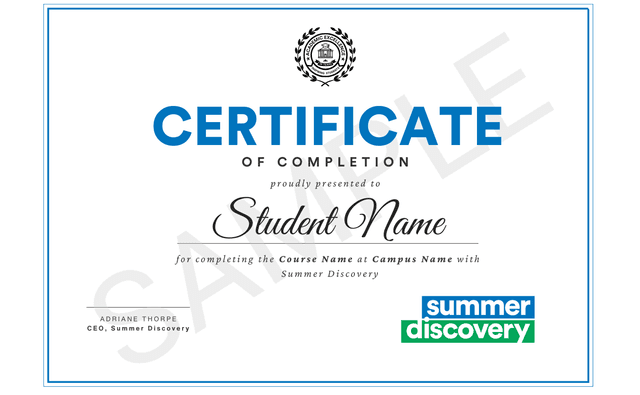
Summer Discovery Certificate of Completion
After successfully finishing this course, you will be awarded a certification completion for your accomplishment.
*This is a preview, not what you will receive