

More reasons to enroll early: Save $250 on tuition + 50% off your deposit. Enroll by Oct 31.
Compare alternative investment strategies in this two-week Dartmouth finance academy for high school students.
Rated 4.7 out of 5 for classroom experience by students who took this course in 2026.

Course Description
An investment can look promising on its own and still be a poor fit for a portfolio. Compare the possibilities and the trade-offs behind the choice.
In this course you will explore how hedge funds, private-equity firms, venture-capital investors, and institutional portfolios operate in global markets. Risk, return, diversification, compounding, and portfolio construction provide a starting point for comparing alternative assets with traditional investments.
Cases, simulations, market data, and discussion let you evaluate strategies, opportunities, and risk. Economics, politics, history, and behavior help explain why investors make different choices. Consider the whole portfolio: how easily holdings can turn into cash, how diversified it is, how long money can stay invested, and what risks it carries.
Guest perspectives from Dartmouth alumni, Tuck School of Business faculty, and finance professionals connect the concepts with careers and current industry questions. Finish by analyzing and presenting an investment case, explaining what the evidence supports and the trade-offs involved.
This two-week full-day academy is part of Dartmouth Precollege Summer Scholars. Students spend the full program focused on one intensive academy. The academy is available to residential and commuter students. The program is developed and academically led by Dartmouth.
What You Will Do
• Compare alternative strategies with traditional investments
• Explore risk, return, compounding, and portfolio construction
• Analyze simplified cases and financial market data
• Try simulations of market and portfolio decisions
• Learn from alumni, faculty, and finance professionals
• Present an investment case with evidence and trade-offs
Learning Outcomes
By the end of the course, students will be able to:
• Explain how major alternative investment strategies differ in purpose and risk
• Analyze an investment case using financial reasoning and market evidence
• Evaluate portfolio decisions in light of economic, political, and behavioral factors
You’ll leave with your investment analysis and a certificate of completion.
Why Alternative Investments Skills Matter
Alternative-investment analysis requires students to compare potential return with risk, liquidity, time horizon, and the role an asset plays in a larger portfolio. A compelling opportunity can look different when viewed through diversification or changing market conditions.
Cases and simulations develop financial reasoning and the ability to make decisions with incomplete information. Considering politics, economics, history, and behavior adds context to the numbers. These skills matter in investment management, finance, consulting, banking, entrepreneurship, public policy, and corporate decision-making.
Who Should Attend?
For students who have completed 9th, 10th, 11th, or 12th grade.
If you’re curious about where institutions put their money and why, this academy gives you cases and market evidence to examine. Finance, economics, business, and investing interests can all lead into the work. You’ll use quantitative information, join simulations, consider uncertain conditions, and present a recommendation. Interest in evidence and trade-offs matters more than familiarity with industry terms.
A school transcript and short-answer responses are required.
Recommended by 9 out of 10 Students
Based on students surveyed in the Dartmouth Precollege Summer Scholars program (2026)
Your Summer at Dartmouth
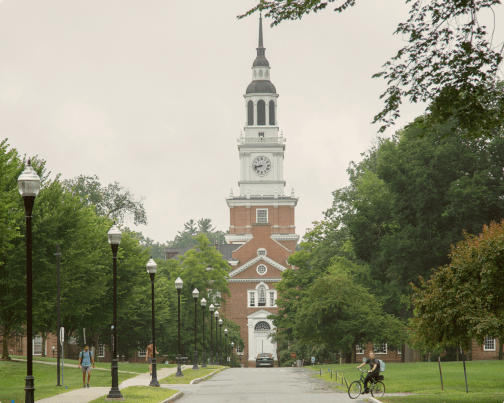
Dartmouth Precollege Summer Scholars gives high school students a concentrated introduction to college-level learning in Hanover, New Hampshire. The program is developed and academically led by Dartmouth. Students explore current ideas through discussion, projects, and sustained work that helps them test an academic interest in depth.
Residential students live in Dartmouth residence halls, eat at 53 Commons, and can join workshops and counselor-supported evening and weekend activities. Time in Hanover and the Upper Valley adds a distinctive New England setting, while the broader experience helps students build independence and clarify what they may want to study next.
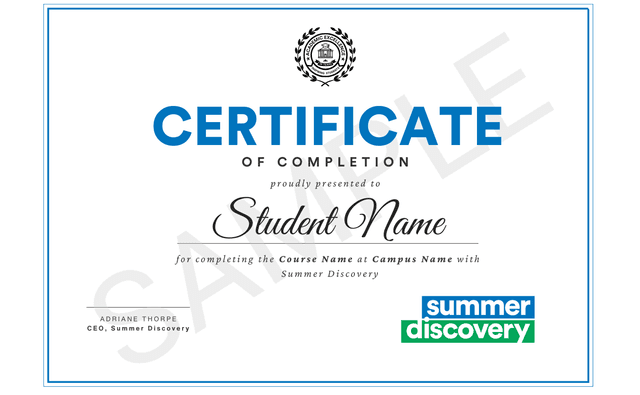
Summer Discovery Certificate of Completion
After successfully finishing this course, you will be awarded a certification completion for your accomplishment.
*This is a preview, not what you will receive