
Early Season Admission Deadline, Guarantee Your First Choice, Enroll by Dec 15th
Practice clinical and laboratory skills, meet medical students and professionals, and explore careers in this two-week Dartmouth medicine academy for high school students.
Instructor:
Course Description
A medical history starts with listening. Vital signs add clues, and even a basic examination can change the questions a clinician asks next.
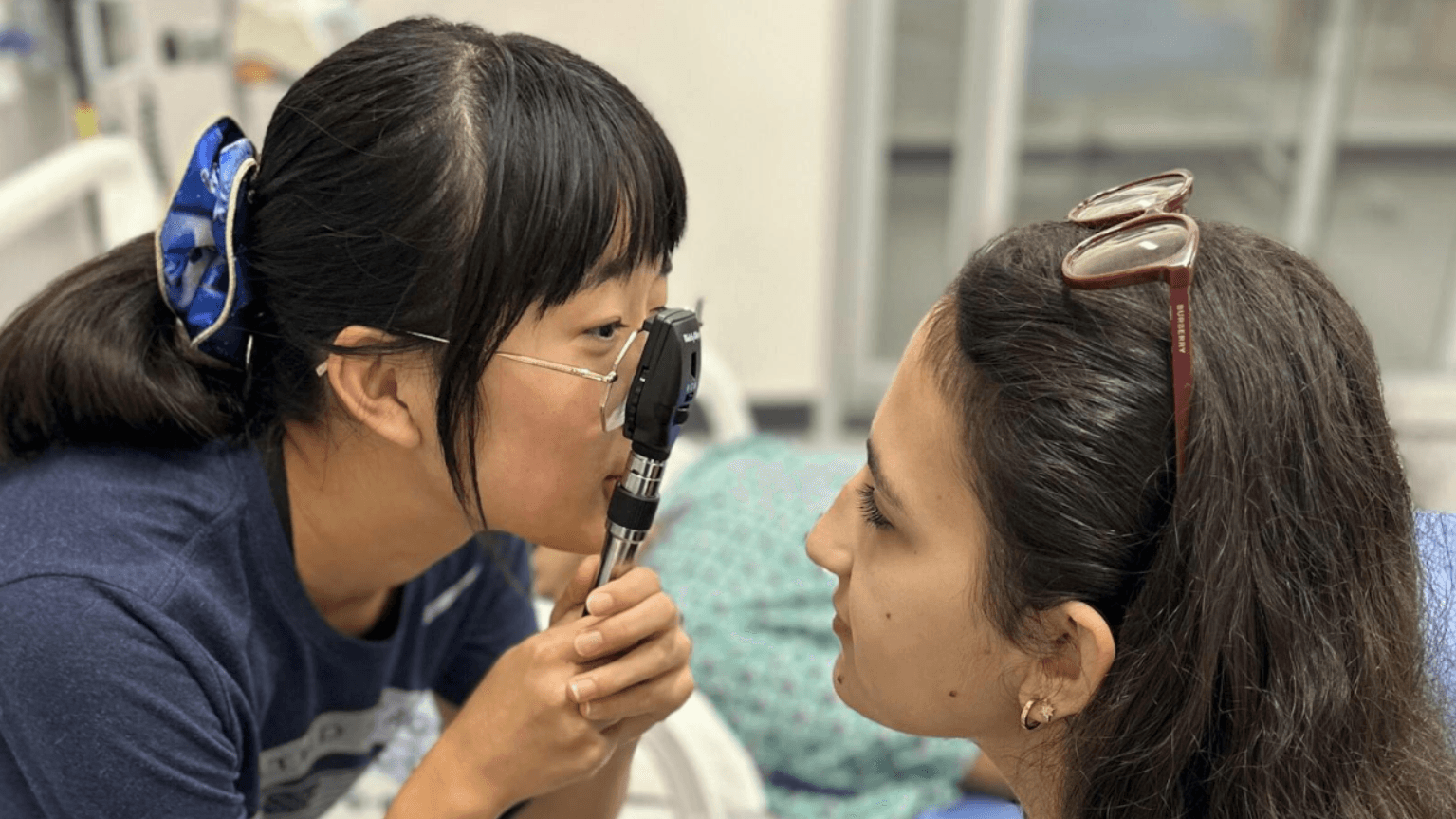
In this course you will explore the subjects that support medical decisions, from biology, biochemistry, chemistry, and physics to psychology, sociology, mathematics, and writing. Through interactive lab demonstrations and hands-on exercises, practice taking a comprehensive medical history, assessing vital signs, and learning basic physical examination skills.
Talk with peers, students from Dartmouth’s Geisel School of Medicine, and practicing medical professionals about their experiences and career paths. Visits to Dartmouth College, Geisel School of Medicine, and Dartmouth Hitchcock Medical Center facilities offer a closer look at medical learning and practice. In a team presentation, explain how these foundational subjects and clinical skills are used in different medical careers.
This two-week full-day academy for high school students is part of the Meriden Valley program from Dartmouth Summer Scholars. Classes are based at Kimball Union Academy in Meriden, New Hampshire. The program welcomes students ages 14 and older, with no previous medical coursework required.
Instructor Bio
Jessa Burling is a PhD student in the Integrative Neuroscience at Dartmouth (IND) program and an organizer of the Upper Valley Brain Bee, a community outreach event introducing local students to neuroscience. She works in the Doucette Lab, which investigates neuromodulation as a treatment for maladaptive behaviors following trauma exposure. A graduate of the University of Wisconsin–Madison with a BS in psychology, Spanish, and criminal justice, Jessa previously worked in a Boston laboratory studying Alzheimer’s disease. In Foundations in Medicine, she draws on experience across psychology, public health, and neuroscience research to help students see how foundational subjects connect with careers in medicine.
Dr. Valerie Rooney is a Clinical Associate Professor of Pediatrics at Dartmouth’s Geisel School of Medicine. She practiced pediatrics in rural southeastern Vermont for 30 years, providing well and sick care, hospital care for patients from birth to age 21, and coverage of the emergency and delivery rooms. At Geisel, she supervises the Rural Health Scholars and teaches first- and second-year medical students in the On Doctoring course. In Foundations in Medicine, she draws on her decades in clinical practice to give students a firsthand look at what a career in medicine involves.
What You Will Do
• Practice taking a comprehensive medical history
• Measure vital signs and try basic examination skills
• Explore foundational sciences through interactive lab demonstrations
• Visit Dartmouth, Geisel, and Dartmouth Hitchcock facilities
• Talk with medical students and working professionals
• Present how core subjects connect to medical careers
Learning Outcomes
By the end of the course, students will be able to:
• Explain how scientific and social disciplines contribute to medical practice
• Describe how patient histories, vital signs, and exams support clinical assessment
• Compare how medical careers draw on foundational subjects and skills
You’ll leave with your team’s medical-career presentation and a certificate of completion.
Why Foundations in Medicine Skills Matter
Medicine rarely depends on one subject or one kind of evidence. Biology and biochemistry help explain body processes, while psychology and sociology show why medical questions also involve people and communities. Taking histories and vital signs reveals how observation and communication work alongside laboratory science.
Connecting those experiences to different medical careers helps students see how professionals use the same foundations in different ways. Asking precise questions, evaluating information, and explaining connections are useful habits for later science and health coursework, whether or not you choose a clinical career.
Who Should Attend?
For students who have completed grades 8-12.
If you’re curious about what happens during a clinical encounter or how subjects beyond biology contribute to medicine, this academy lets you try some of the work. You’ll practice introductory clinical and laboratory skills, talk with medical students and professionals, and explore several career paths. No previous medical coursework is required.
Your Summer at Dartmouth in Meriden Valley
This course is part of the Meriden Valley program from Dartmouth Summer Scholars, open to students 14 and up regardless of prior coursework. Classes and housing are on KUA's 1,300-acre campus in Meriden, New Hampshire, a short drive from Dartmouth, where students receive the same high-quality academic experience as students on Dartmouth’s campus. Students live in modern, air-conditioned residence halls with a 1:8 staff ratio, and each session includes time on Dartmouth’s campus and a half-day field trip to Dartmouth’s research hospital. Completing this course may make students eligible for advanced courses in future summers of Dartmouth Summer Scholars.
After successfully finishing this course, you will be awarded a certification completion for your accomplishment.
*This is a preview, not what you will receive