

More reasons to enroll early: Save $250 on tuition + 50% off your deposit. Enroll by Oct 31.
Test a venture idea and pitch a prototype in this two-week Dartmouth academy for high school students.
Rated 4.3 out of 5 for overall experience by students surveyed across the broader program in 2026.
Course Description
Start by finding a problem worth solving. A conversation with the person facing it can change the idea you thought you wanted to build.
In this course you will join a venture team to explore campus for problems worth solving and interview potential customers. Observation and empathy help you identify a meaningful need before settling on a business idea. Innovation sprints take you through design thinking, customer discovery, rapid prototyping, testing, and venture modeling.
Evidence from potential users helps your team narrow the opportunity, revise assumptions, and strengthen a prototype. Work through how your venture could create and deliver value, what it would cost, and who it would serve. Sustainability, ethics, equity, accessibility, and intended impact belong in those decisions too. At the Venture Showcase, present a polished pitch and tested prototype. Your team’s venture portfolio brings together research, the prototype, testing evidence, venture model, impact strategy, and presentation. Keep the proposal realistic and open to what users teach you.
This two-week full-day academy for high school students is part of Dartmouth Precollege Summer Scholars in Hanover, New Hampshire. Students focus on one academy for the full program. The program is developed and academically led by Dartmouth. Residential and commuter options are available.
What You Will Do
• Explore campus to identify problems worth solving
• Interview potential users to understand a problem
• Build and test rapid prototypes with your team
• Develop a venture model for creating and delivering value
• Weigh ethics, equity, accessibility, sustainability, and intended impact
• Pitch your tested prototype at the Venture Showcase
Learning Outcomes
By the end of the course, students will be able to:
• Frame a meaningful problem using observation and customer evidence
• Evaluate and refine a prototype and venture model through testing
• Support a venture proposal with evidence and responsible impact choices
You’ll leave with your team’s venture portfolio and a certificate of completion.
Why Entrepreneurship Skills Matter
Entrepreneurship asks students to notice a real need before proposing a solution. Observation, interviews, and customer discovery help teams replace assumptions with evidence. Prototyping then allows them to test whether an idea creates value for the people it is meant to serve.
Venture modeling and impact questions add strategic and ethical judgment. Students consider costs, delivery, sustainability, equity, and accessibility alongside the pitch. These habits matter in business, engineering, design, technology, community leadership, and social innovation wherever people turn ideas into responsible action.
Who Should Attend?
For students who have completed 9th, 10th, 11th, or 12th grade.
If you notice things that could work better and want to try making them, this academy offers a place to start. You might come with an interest in business, design, technology, engineering, sustainability, or social impact. Working in a venture team means talking with people, testing assumptions, revising a prototype, and pitching a solution. Curiosity and initiative matter, especially when feedback shows that an early idea needs another look.
Recommended by 9 out of 10 Students
Based on students surveyed in the Dartmouth Precollege Summer Scholars program (2026)
Your Summer at Dartmouth
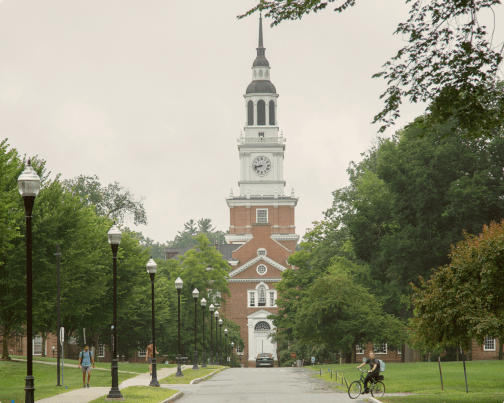
Dartmouth Precollege Summer Scholars gives high school students a concentrated introduction to college-level learning in Hanover, New Hampshire. The program is developed and academically led by Dartmouth. Students explore current ideas through discussion, projects, and sustained work that helps them test an academic interest in depth.
Residential students live in Dartmouth residence halls, eat at 53 Commons, and can join workshops and counselor-supported evening and weekend activities. Time in Hanover and the Upper Valley adds a distinctive New England setting, while the broader experience helps students build independence and clarify what they may want to study next.
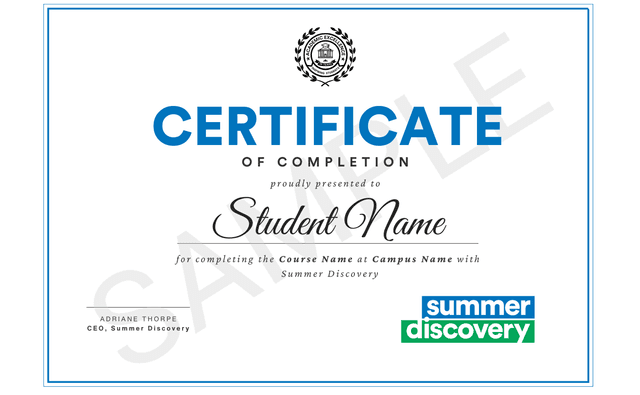
Summer Discovery Certificate of Completion
After successfully finishing this course, you will be awarded a certification completion for your accomplishment.
*This is a preview, not what you will receive