

More reasons to enroll early: Save $250 on tuition + 50% off your deposit. Enroll by Oct 31.
Write outdoors and assemble a multigenre portfolio in this two-week Dartmouth academy for high school students.
Rated 4.3 out of 5 for overall experience by students surveyed across the broader program in 2026.
Course Description
A walk outdoors can become the beginning of a poem, a story, or a memory worth putting into words. Notice the details, then see where they take your writing.
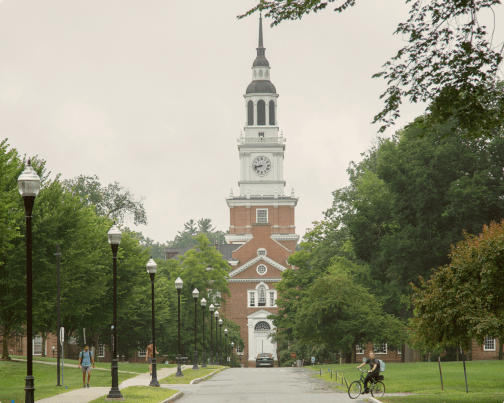
In this course you will use Dartmouth’s outdoor spaces as both subject and classroom. Guided walks, meditation, close observation, and daily exercises give you material for poetry, short fiction, and creative nonfiction. Writing sessions in places such as Pine Park, Occum Pond, the outdoor amphitheater, and the Robert Frost site offer changing settings and perspectives.
Readings and lessons help you experiment with imagery, metaphor, voice, sensory detail, point of view, and narrative structure. Return to the same notes with a different form or perspective and discover how the writing changes. In collaborative workshops, share drafts and give constructive feedback, then use peer and instructor responses to decide what serves your piece. You’ll assemble a small portfolio of revised work and present selected writing in a closing reading. The process gives you practice shaping an experience for a reader while keeping your own voice.
This two-week full-day academy for high school students is part of Dartmouth Precollege Summer Scholars. Students focus on one academy for the full program. Available to residential students, it takes place on Dartmouth’s main campus and at Moosilauke Ravine Lodge, where outdoor experiences are part of the learning. The program is developed and academically led by Dartmouth.
What You Will Do
• Gather writing ideas through guided walks and observation
• Experiment with poetry, short fiction, and creative nonfiction
• Write in Dartmouth settings, including Pine Park and the outdoor amphitheater
• Try different imagery, voices, and points of view
• Revise drafts through peer and instructor workshop feedback
• Assemble a portfolio and share a closing reading
Learning Outcomes
By the end of the course, students will be able to:
• Create poetry, fiction, and creative nonfiction grounded in observation and place
• Use feedback to strengthen a piece’s voice, structure, imagery, and detail
• Explain how form and point of view shape a reader’s experience
You’ll leave with your multigenre portfolio and a certificate of completion.
Why Creative Writing Skills Matter
Creative writing develops close observation, deliberate language, and the ability to shape an experience for a reader. Writing outdoors makes those habits concrete because students must notice sound, texture, movement, scale, and the relationship between people and place.
Workshop and revision add another skill: learning to hear feedback without giving up ownership of the work. Students decide which changes serve the piece and explain their choices. These practices support writing in every discipline while building confidence, empathy, and a more flexible creative process.
Who Should Attend?
For students who have completed 9th, 10th, 11th, or 12th grade.
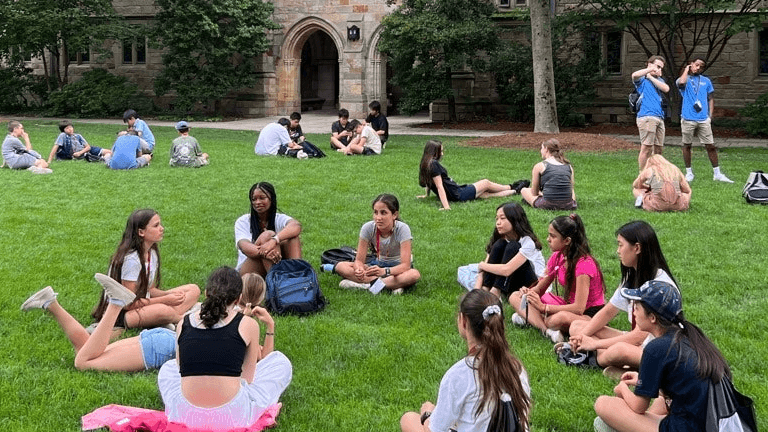
You might fill notebooks already, love getting lost in a book, or simply want a reason to start writing. This academy welcomes those starting points and invites you to try poetry, fiction, and creative nonfiction. Daily writing and workshops give you time to develop ideas, share drafts, and discover what revision can do. Expect time outdoors in varied weather, alongside reading, constructive feedback, and a chance to share your work aloud.
Recommended by 9 out of 10 Students
Based on students surveyed in the Dartmouth Precollege Summer Scholars program (2026)
Your Summer at Dartmouth
Dartmouth Precollege Summer Scholars gives high school students a concentrated introduction to college-level learning in Hanover, New Hampshire. The program is developed and academically led by Dartmouth. Students explore current ideas through discussion, projects, and sustained work that helps them test an academic interest in depth.
Residential students live in Dartmouth residence halls, eat at 53 Commons, and can join workshops and counselor-supported evening and weekend activities. Time in Hanover and the Upper Valley adds a distinctive New England setting, while the broader experience helps students build independence and clarify what they may want to study next.
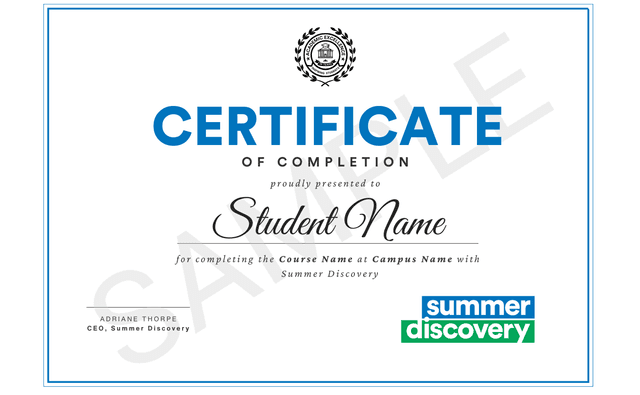
Summer Discovery Certificate of Completion
After successfully finishing this course, you will be awarded a certification completion for your accomplishment.
*This is a preview, not what you will receive