
More reasons to enroll early: Save $250 on tuition + 50% off your deposit. Enroll by Oct 31.
Negotiate a global crisis in a UN simulation during this two-week Dartmouth academy for high school students.
Rated 4.3 out of 5 for overall experience by students surveyed across the broader program in 2026.
Course Description
Represent a country at the negotiating table, where a resolution needs more than a convincing argument. Other states have priorities of their own.
In this course you will investigate why international conflicts begin, how they end, and what diplomats and institutions can do when interests collide. Case studies and current events introduce civil war, peacekeeping, and the United Nations’ role in international security. Library research and guest speakers from Dartmouth’s Dickey Center for International Understanding connect your work with international-affairs practice.
Your research builds toward a United Nations Security Council simulation focused on conflicts in Sudan, the Democratic Republic of Congo, and Somalia. Evaluate sources, prepare briefings, and compare the interests and constraints of member states. Drafting resolutions turns an idea into language others can negotiate. Build coalitions, weigh trade-offs, and respond to questions while representing your assigned country. The final crisis response brings the preparation together: decide which goals are essential and where compromise is possible. It’s a chance to explore the research and judgment behind diplomacy and public policy.
This two-week full-day academy for high school students is part of Dartmouth Precollege Summer Scholars in Hanover, New Hampshire. Students focus on one academy for the full program. The program is developed and academically led by Dartmouth. Residential and commuter options are available.
What You Will Do
• Investigate how civil wars begin and end
• Compare conflict-resolution strategies and peacekeeping approaches
• Research state interests using library and international-affairs resources
• Prepare briefings and draft UN Security Council resolutions
• Build coalitions around shared interests and trade-offs
• Negotiate responses to simulated international crises
Learning Outcomes
By the end of the course, students will be able to:
• Explain how negotiation and conflict-resolution strategies apply to international crises
• Evaluate sources and competing perspectives in international-affairs research
• Support diplomatic proposals with evidence and an understanding of state interests
You’ll leave with your researched resolutions and a certificate of completion.
Why International Negotiation Skills Matter
International negotiation requires students to understand both their own goals and the pressures shaping another party's position. Strong negotiators research carefully, identify trade-offs, build coalitions, and communicate clearly without losing sight of the larger problem.
Simulations make those skills visible. Drafting resolutions and responding to debate develop evidence use, strategic thinking, public speaking, and compromise under pressure. These abilities matter in diplomacy, law, policy, business, nonprofit leadership, and any setting where people must work across conflicting interests.
Who Should Attend?
For students who have completed 9th, 10th, 11th, or 12th grade.
If you follow global events and find yourself considering what different countries might do next, this academy gives you a role in the debate. Research, team negotiation, and public speaking bring interests in history, politics, law, and diplomacy into focus. You’ll represent a position you may not personally hold, prepare carefully, and draft formal resolutions. The simulation involves serious real-world conflicts and respectful disagreement over possible responses.
Recommended by 9 out of 10 Students
Based on students surveyed in the Dartmouth Precollege Summer Scholars program (2026)
Your Summer at Dartmouth
Dartmouth Precollege Summer Scholars gives high school students a concentrated introduction to college-level learning in Hanover, New Hampshire. The program is developed and academically led by Dartmouth. Students explore current ideas through discussion, projects, and sustained work that helps them test an academic interest in depth.
Residential students live in Dartmouth residence halls, eat at 53 Commons, and can join workshops and counselor-supported evening and weekend activities. Time in Hanover and the Upper Valley adds a distinctive New England setting, while the broader experience helps students build independence and clarify what they may want to study next.
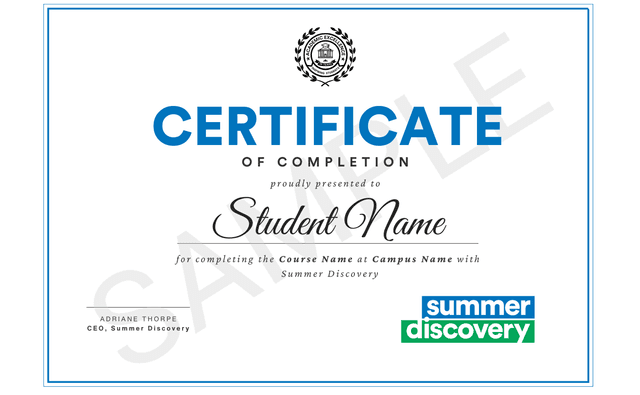
Summer Discovery Certificate of Completion
After successfully finishing this course, you will be awarded a certification completion for your accomplishment.
*This is a preview, not what you will receive