
More reasons to enroll early: Save $250 on tuition + 50% off your deposit. Enroll by Oct 31.
Create and break ciphers in this three-week cryptography course for elementary and middle school students on Cornell University’s campus.
Rated 4.5 out of 5 for course experience by students surveyed across the broader program in 2026.
Instructor:
Course Description
A secret message looks like a jumble until a pattern gives it away. Count the letters, test a guess, and see how much information a cipher leaves behind.
You’ll start with Caesar shifts and substitution ciphers, exchanging messages with classmates and trying to decode them without the key. Letter-counting spreadsheets reveal clues hidden in repeated words and common letters. Grid ciphers and Vigenère keywords introduce different ways to scramble a message. Clock-style arithmetic, matrices, and prime numbers show how mathematical rules can make a code work and help explain its weaknesses.
The course connects these challenges to the history of codebreaking and the public-key methods used in digital communication. Guided RSA exercises use small numbers so you can follow the steps of encryption and decryption. For your capstone, choose an original cipher, a codebreaking investigation, a teaching tool, or a historical study. Develop the project through feedback and revision, then present the method, evidence, and limits of your approach to the class.
This three-week course for elementary and middle school students is part of Summer Discovery’s Institute for the Gifted program on Cornell University’s campus in Ithaca, New York. Beyond class, students connect active academic exploration with campus life, new friendships, growing independence, and curiosity they can keep exploring.
What You Will Do
• Encrypt and exchange messages using Caesar shifts and substitution ciphers
• Use letter-counting spreadsheets to investigate patterns in encrypted text
• Create grid ciphers and encode messages with Vigenère keywords
• Apply clock-style arithmetic, matrices, and prime numbers to cipher problems
• Work through guided RSA encryption and decryption exercises
• Develop and present an original cryptography capstone with supporting evidence
Learning Outcomes
By the end of the course, students will be able to:
• Apply mathematical rules to encrypt and decrypt a message
• Use patterns and letter frequencies to explain a cipher’s possible weaknesses
• Present and evaluate a cryptography project using evidence and clear reasoning
You’ll leave with your cryptography capstone and a clearer sense of which puzzles, mathematical methods, or coding ideas you want to explore next.
Why Cryptography Skills Matter
A codebreaking guess has to survive a test. Counting letters, comparing patterns, and checking a decoded message help students distinguish a promising idea from one that only seems right. When a method fails, the error gives them a reason to revise their approach.
Cryptography also makes abstract mathematics easier to picture. A remainder can determine a letter, and a matrix can scramble a message. Explaining those steps to classmates develops precision and patience. Students practice showing how they reached a conclusion, useful habits for mathematics, science, and any problem that needs a defensible answer.
Is This Course Right for You?
For students who have completed 5th, 6th, 7th, or 8th grade.
If you enjoy puzzles, hidden messages, or asking how something works, cryptography gives you plenty to investigate. You’ll work through mathematical examples, compare approaches with classmates, and develop a project you can explain. No prior coding or advanced mathematics experience is required; comfort with algebra is helpful. Students should bring a compatible laptop, charger, headphones, and a scientific calculator or device with a calculator app.
Institute for the Gifted eligibility requirements apply; see the program FAQ. A completed program application is required.
Recommended by More Than 4 out of 5 Students
Based on students surveyed in Summer Discovery’s 2026 Cornell program.
Your Summer at Cornell
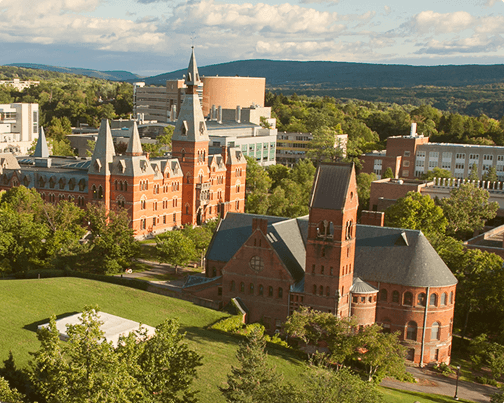
Cornell’s Ithaca setting gives elementary and middle school students an adventurous first experience of campus life, surrounded by Finger Lakes gorges, waterfalls, and a landscape shaped by research, agriculture, and invention. The setting makes learning feel different from an ordinary school day and gives students plenty to notice and explore.
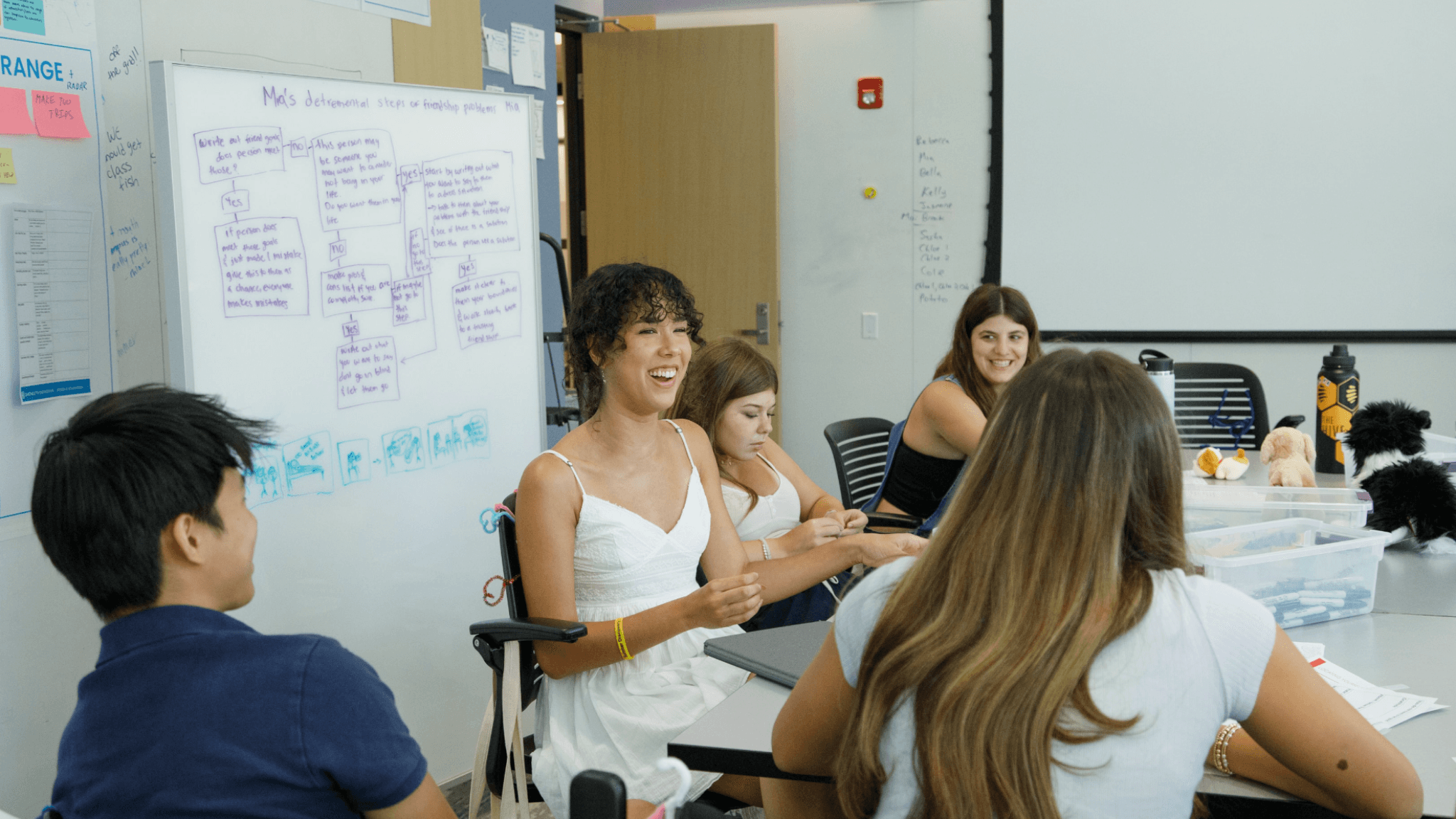
The program combines active academics with friendships, campus activities, clear routines, and support as students become more comfortable in a new environment. Students can try challenging ideas, share interests with peers, and enjoy the fun of living and learning on a university campus. For families, Cornell offers a structured middle-school experience that balances learning and discovery with community, support, and growing independence.
Cryptography in Action
Cryptography appears whenever information needs protection: a message sent online, a payment, or access to an account. People who design security systems have to consider who can read a message, which information an observer can see, and how a system might be attacked. Historians ask related questions when studying intercepted messages and the choices made around them.
The course offers several ways to keep exploring those questions. You might investigate a historical cipher, try a codebreaking challenge, or make a tool that explains encryption to someone else. Each direction combines a mathematical method with a practical reason for using it.
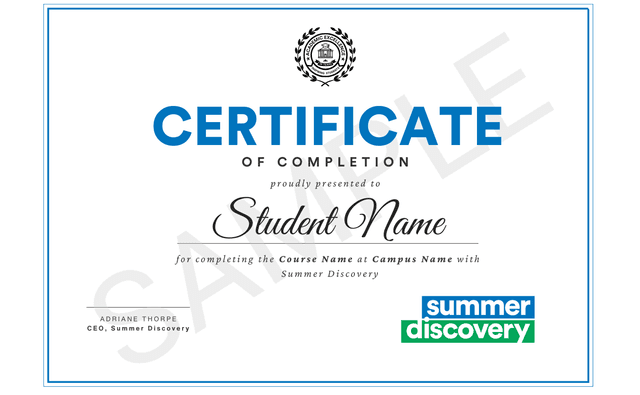
Summer Discovery Certificate of Completion
After successfully finishing this course, you will be awarded a certification completion for your accomplishment.
*This is a preview, not what you will receive