
More reasons to enroll early: Save $250 on tuition + 50% off your deposit. Enroll by Oct 31.
Build and test flying designs in this three-week aerospace engineering course for elementary and middle school students on Cornell University’s campus.
Course Description
A glider takes off, wobbles, and lands sooner than expected. Moving its balance or changing a wing turns that short flight into a new design challenge.
In this course your child will explore the forces that make things fly. Paper airplanes, parachutes, and wing tests introduce lift, drag, thrust, and weight. Students build gliders, launch water bottle rockets, and compare what happens when they change a design. They also explore how satellites and spacecraft stay in orbit.
Mini drones bring sensors and coding into the picture. Students pilot a drone, then program a route for it to follow. Each challenge gives them something to test and improve. The Mission Lander Challenge puts those ideas together: teams build a lander to protect fragile cargo in a drop test, then explain the choices behind it.
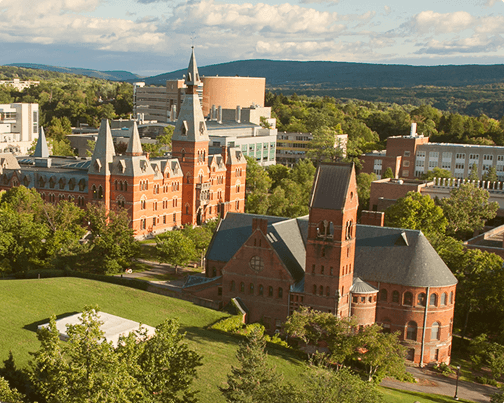
This three-week Summer Discovery course for elementary and middle school students takes place on Cornell University’s campus in Ithaca, New York. Residential and commuter options are available.
What You Will Do
• Test paper airplanes, parachutes, and wing shapes
• Build a glider for distance and stability
• Launch water bottle rockets and redesign for another flight
• Explore how satellites and spacecraft stay in orbit
• Pilot a mini drone and code its route
• Build a team lander to protect fragile cargo
Learning Outcomes
By the end of the course, students will be able to:
• Explain how lift, drag, thrust, and weight affect flight
• Use test results to improve an engineering design
• Compare how gliders, rockets, and drones meet different flight challenges
You’ll leave with your glider and flight-test results, a team Mission Lander design presentation, and a certificate of completion.
Why Engineering Skills Matter
A glider’s short flight gives students a problem they can see. Changing its balance or wing shape and testing again helps them connect forces with results. Measuring the difference makes an improvement easier to explain.
Team design challenges also ask students to compare ideas and explain their choices. These habits support science and math projects, where a useful answer depends on what a test shows and how clearly someone can describe it.
Is This Course Right for You?
For students who have completed 5th, 6th, 7th, or 8th grade.
For a child who builds things, follows rocket launches, or wonders how a plane stays up, this course offers hands-on ways to explore. Students use basic math and measurement in team design challenges. No prior engineering or coding experience is needed.
Your Summer at Cornell
Cornell’s Ithaca setting gives elementary and middle school students a taste of campus life in New York’s Finger Lakes region. Gorges, waterfalls, and the surrounding landscape give this university setting a character of its own.
The program combines academic exploration with campus activities and time to make friends. Students share interests with peers, try new ideas, and grow more comfortable in a new environment. Clear routines and supportive staff help them settle in. Families can choose a residential or commuter experience, with opportunities to enjoy learning and being part of a summer community.
After successfully finishing this course, you will be awarded a certification completion for your accomplishment.
*This is a preview, not what you will receive