



Pick up the tools — and let mind, hand, and material meet to make your vision a physical reality.
Instructor:

Course Description
This course uses immersive hands-on approaches to connect engineering design and materials science with the scientific process of discovery and development, and to the practical real-world constraints that determine whether ideas succeed, such as feasibility, durability, efficiency, sustainability, safety, and cost. Students will learn to translate observations about problems and ideas into well-framed engineering problems and then build toward a functional solution through structured prototyping cycles.
A defining feature of the course is that students don’t just build. In this course they learn to think like scientists and engineers and to translate their creations into products as entrepreneurs. Teams form hypotheses about what will improve their designs, run controlled tests, collect measurements, and use evidence to choose between design options. A hands-on materials component builds intuition about processes and materials through simple but rigorous comparative tests, such as stiffness/deflection, impact resistance, friction/wear, and basic process testing, helping students justify design and material choices and understand tradeoffs. The overall experience is designed to include a minimum of 40% hands-on requirement, with daily build-and-test sessions.
Entrepreneurship is integrated in a practical way. Students learn how to craft a clear value proposition, compare alternatives, estimate rough costs, and use user feedback as actionable data to update requirements. This keeps their engineering grounded in reality and strengthens the incentive for quality work where the prototypes are designed not only to work, but to matter to a user and be possible to make. Communication is treated as an engineering skill where students document decisions and defend claims with evidence, not assumptions or hype.
Learning Outcomes
At the end of the course, students will be able to:
Note: Information is subject to change as course content is finalized.
![[object Object]](/_next/image?url=https%3A%2F%2Fassets.summerdiscovery.com%2FdynamicPage%2Fcourse%2Fcourse%2FcardImage%2F1737671564703_88.png&w=48&q=75)
Course Syllabus
To view a sample syllabus, please contact your program specialist, or reach us at info@summerdiscovery.com or call +1 (516) 447-4907.
![[object Object]](/_next/image?url=https%3A%2F%2Fassets.summerdiscovery.com%2FdynamicPage%2Fcourse%2Fcourse%2FcardImage%2F1737667949979_5.png&w=48&q=75)
Admissions Criteria
An interest in all things engineering and innovation is the key to success in this program! Additionally, your application criteria include:
![[object Object]](/_next/image?url=https%3A%2F%2Fassets.summerdiscovery.com%2FdynamicPage%2Fcourse%2Fcourse%2FcardImage%2F1737671679325_63.png&w=48&q=75)
Who should attend this course?
Aspiring makers and innovators, this is a start to your successful academic and professional career. This course will introduce you to fundamentals that will advance your understanding of this field and help you determine whether a professional track in analog fabrication is right for you.
![[object Object]](/_next/image?url=https%3A%2F%2Fassets.summerdiscovery.com%2FdynamicPage%2Fcourse%2Fcourse%2FcardImage%2F1737668096457_85.png&w=48&q=75)
Benefits of Attending this Course
In addition to a university-level course experience, students will leave this course and the Dartmouth Summer Scholars program with portfolio-building documentation in recognition of their summer achievements, including:
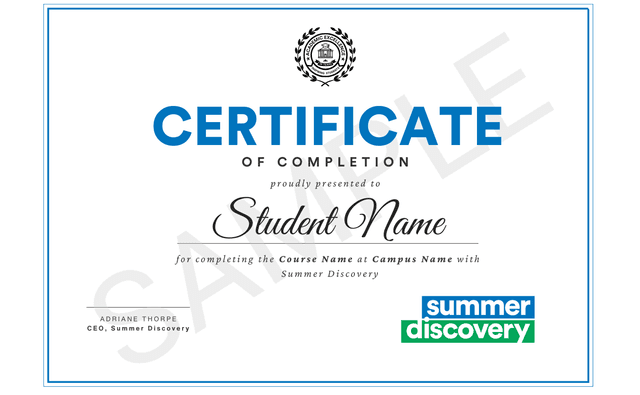
Summer Discovery Certificate of Completion
After successfully finishing this course, you will be awarded a certification completion for your accomplishment.
*This is a preview, not what you will receive