

More reasons to enroll early: Save $250 on tuition + 50% off your deposit. Enroll by Oct 31.
Identify an unknown microorganism in this 3-week laboratory microbiology program for high school students on UT Austin’s campus.
Rated 4.7 out of 5 for classroom experience by students who took this course in 2026.
Course Description
An unknown microbe leaves clues in its shape, growth, movement, and response to treatment. Learn how to gather those clues and make an identification you can explain.
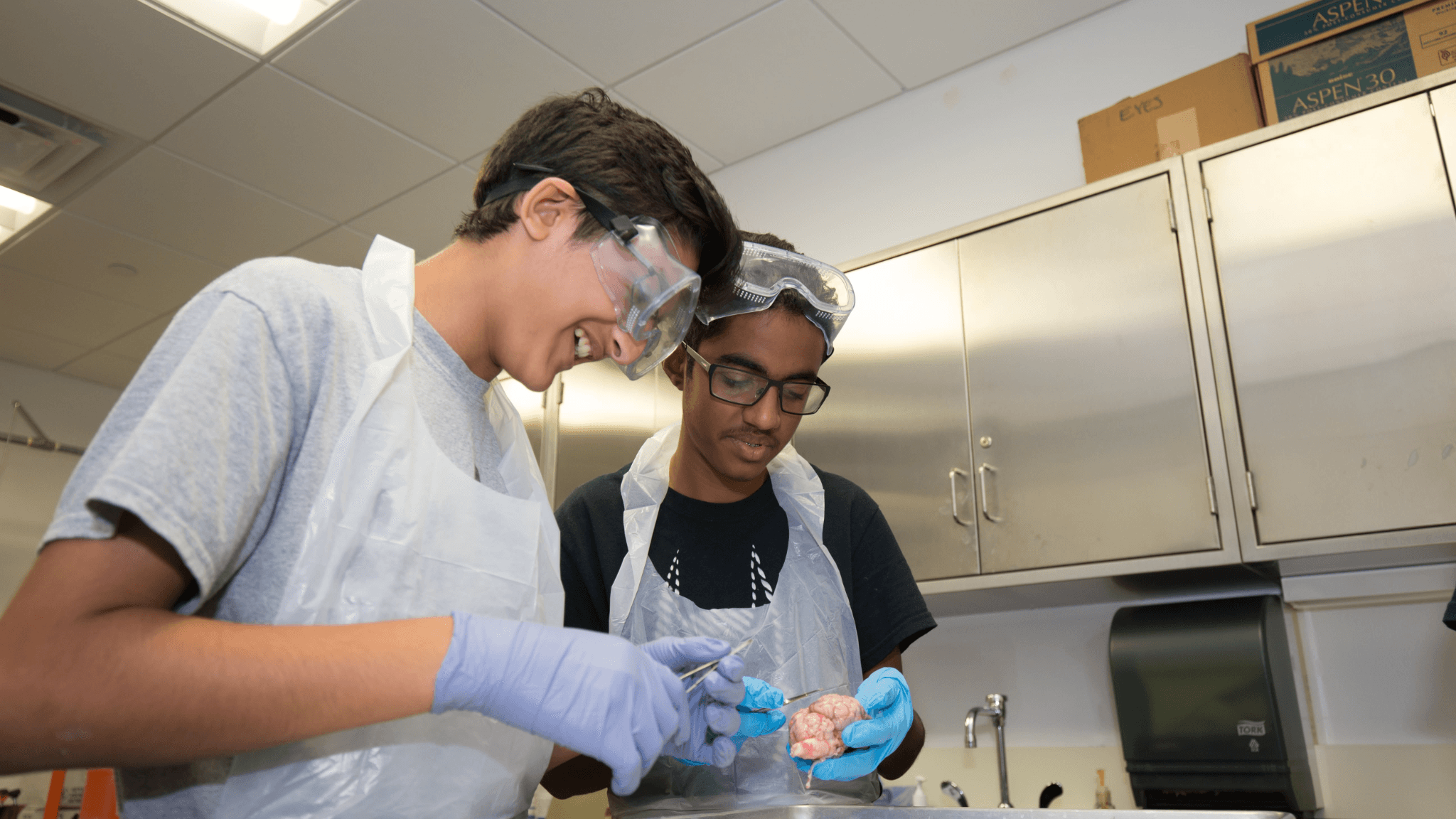
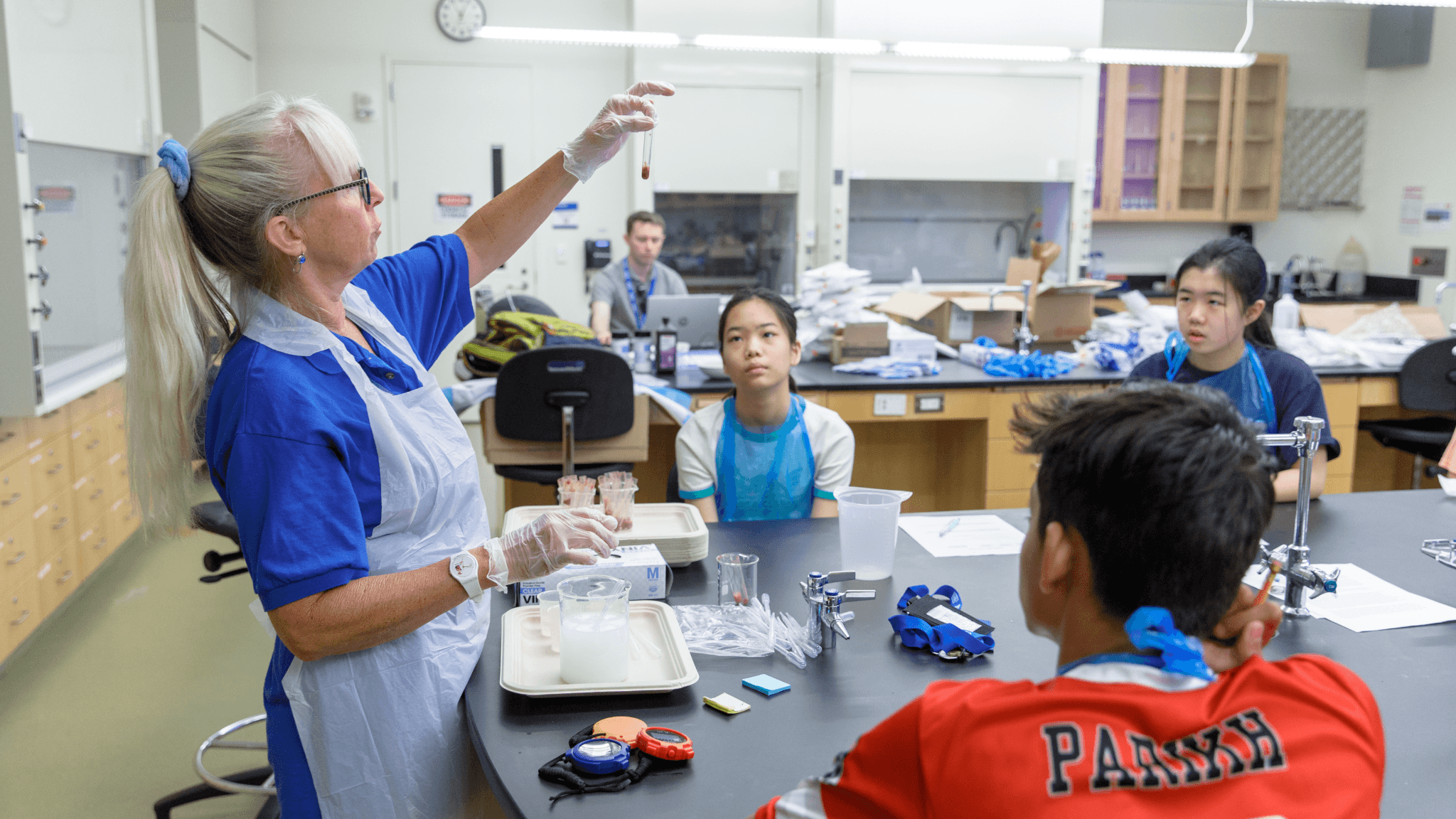
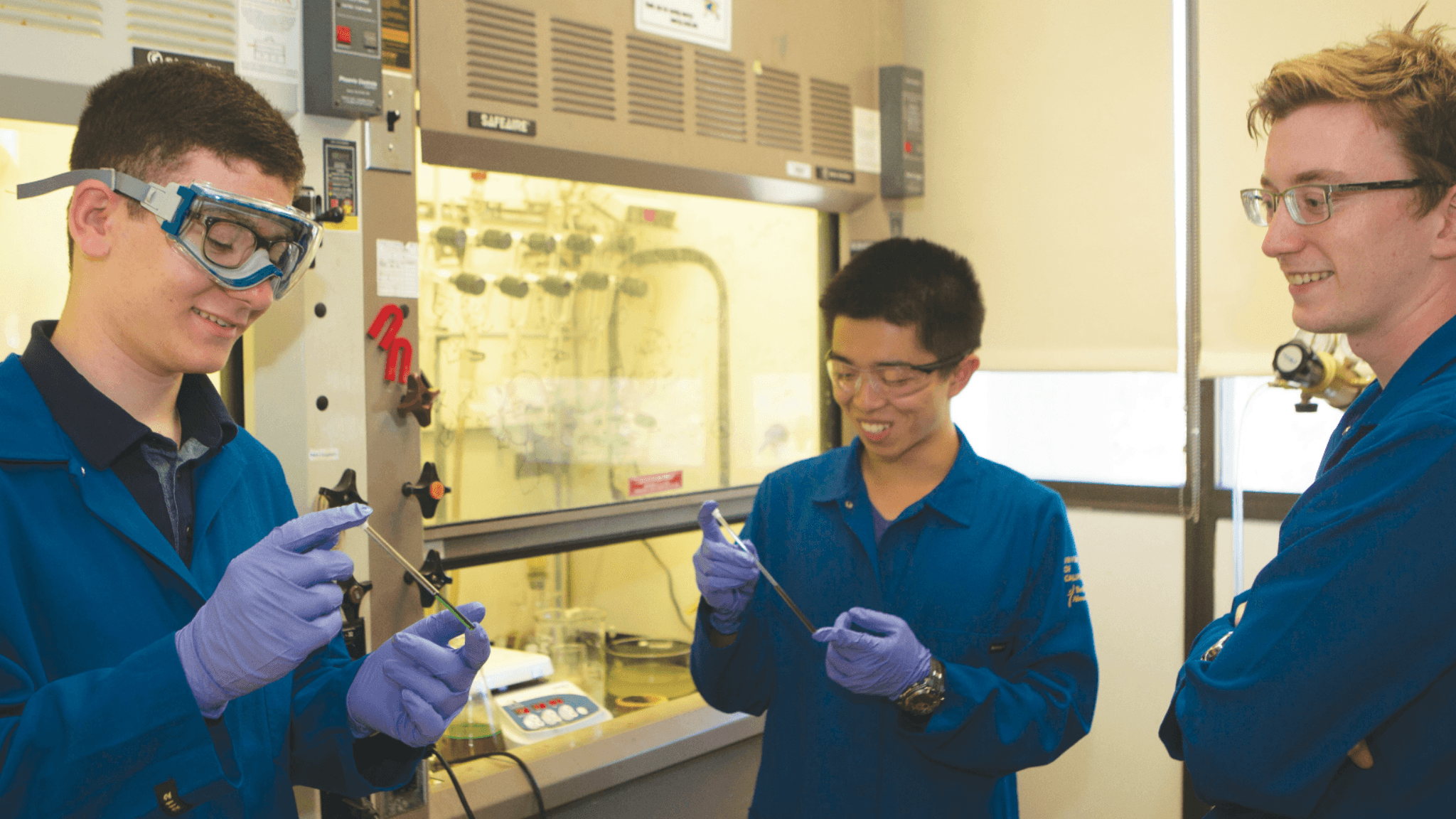
In this course you will begin with laboratory safety and notebook procedures, then use microscopes, prepare slides, and practice methods that protect samples from contamination. Label agar plates and learn continuous and three-phase streak techniques for studying growth.
Compare bacteria, fungi, and molds and examine how microbes cause disease. Collect environmental samples from Waller Creek and Turtle Pond, test handwashing methods, and investigate transmission. Work with antibiotics and natural antimicrobial substances connects laboratory results with vaccines, antibiotic resistance, and infection control.
For your final project, apply the course techniques to an unknown microorganism over several sessions. Record methods and observations, use the evidence to identify it, and prepare a ten-minute presentation. Explaining the organism’s place in historical and current research gives your laboratory work a wider context and a reason to be precise.
This three-week course for high school students takes place at UT Austin in Austin, Texas. The program is developed by the University of Texas at Austin and offered in partnership with Summer Discovery. Residential and commuter options are available.
A supplemental course fee of $95 applies.
What You Will Do
• Practice laboratory safety, aseptic technique, microscopy, and notebook documentation
• Label agar plates and use continuous and three-phase streak methods
• Prepare slides to compare bacteria, fungi, molds, and microbial movement
• Collect and analyze environmental samples from campus water sites
• Test handwashing methods, antibiotics, and natural antimicrobial substances
• Identify an unknown microorganism and present its research significance
Learning Outcomes
By the end of the course, students will be able to:
• Use microscopy, culture methods, and aseptic procedures safely
• Explain microbial growth, transmission, and responses to antimicrobial conditions
• Support a microbial identification with documented observations and test evidence
You’ll leave with your laboratory notebook, unknown-microbe presentation, and a certificate of completion.
Students receive a University of Texas branded certificate of completion at the end of the program.
Why Microbiology Skills Matter
Microbiology makes scientific method visible at a small scale. Aseptic technique protects a sample from contamination, a laboratory notebook preserves the steps behind a result, and microscopy turns morphology and movement into observable evidence. Students learn that an identification is credible only when the process can be explained.
Experiments involving handwashing and antibiotics connect laboratory choices with infection control and public health. Comparing observations over time strengthens attention to detail, while an unknown-sample project requires students to combine multiple clues rather than rely on one test. These habits support future biology, biotechnology, medicine, environmental science, and laboratory research.
Who Should Attend?
For students who have completed 9th, 10th, 11th, or 12th grade.
If you enjoy looking closely and using tests to solve a scientific problem, this course makes the invisible world of microbes more tangible. Interests in disease, biotechnology, medicine, or environmental science all connect with the laboratory work.
Expect to handle cultures under safety and aseptic procedures, collect environmental samples, keep a detailed notebook, and give a ten-minute presentation. Patient observation matters because useful evidence develops over time.
Your Summer at University of Texas at Austin
Studying on UT Austin’s Forty Acres campus gives high-school students a substantive introduction to academic life in Austin, Texas. Courses draw from popular undergraduate fields and Austin specialties. Full-day academies offer concentrated study, while classes across the program take place in campus classrooms and laboratories and may include guest speakers and fieldwork around Austin.
The experience extends beyond class for both residential and commuting students. Residential students live in Jester Hall, eat at J2, a popular campus dining hall, and take part in activities that may range from a star party at PMA to time at Gregory Gym, Zilker Park, South Congress, or an Austin FC match. Students gain independence, meet peers, and leave with a clearer view of college life, possible directions for future study, and what it can feel like to be a Longhorn.
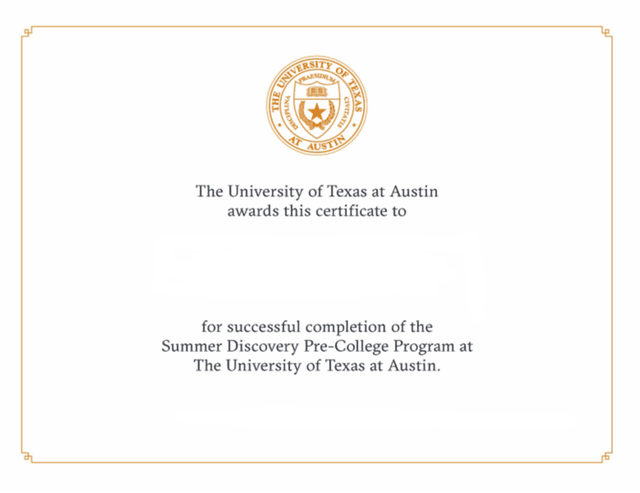
UT Austin Certificate of Completion
After successfully finishing this course, you will be awarded a certification completion for your accomplishment.
*This is a preview, not what you will receive