


More reasons to enroll early: Save $250 on tuition + 50% off your deposit. Enroll by Oct 31.
Analyze legal problems and present reasoned arguments in this 3-week law academy for high school students on UT Austin’s campus.
Rated 4.6 out of 5 for course experience by students surveyed across the broader program in 2026.
Instructor:



Course Description
A dispute about fairness can also raise a very specific legal question. Find the rule that governs it and build an argument for how that rule applies.
In this course you will examine the Constitution, separation of powers, federalism, courts, statutes, and common law. Seminar discussions connect those sources of authority with current events and the lives of individuals, families, and communities.
Compare civil and criminal systems. Work through torts, negligence, strict liability, contracts, remedies, property, and intellectual property, then consider criminal responsibility and different goals of criminal justice. The same facts may raise legal, moral, and political questions; learning to separate them helps you make a clearer case.
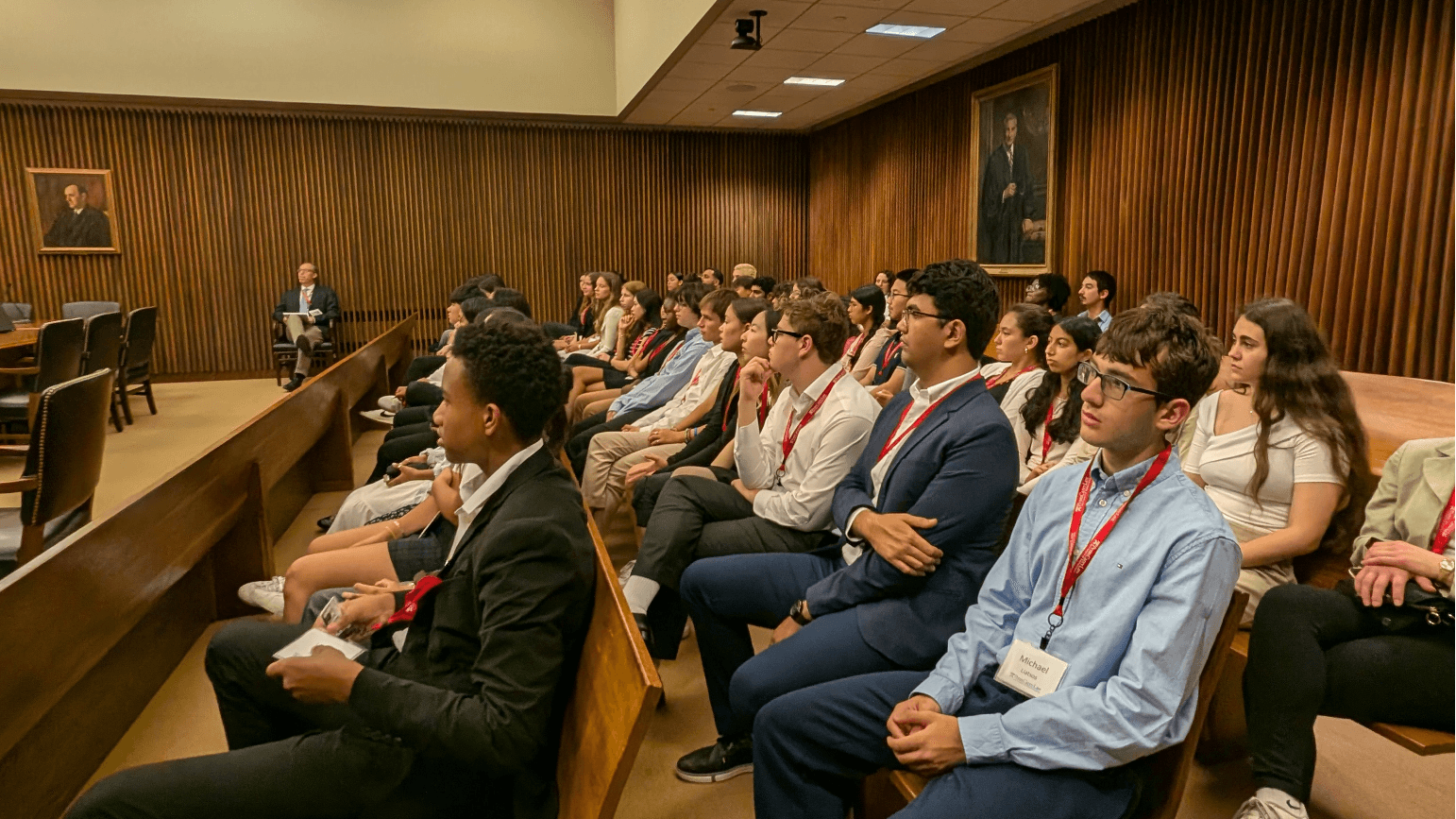
Concise readings and a law-school seminar format put discussion at the center. The Socratic method uses questions to test your reasoning as you summarize rules and apply them to new facts. Negotiation and legislative lawyering add practical perspectives. Sessions on law school and experiential opportunities help you explore where an interest in legal study might lead.
This three-week full-day academy for high school students takes place at UT Austin in Austin, Texas. The program is developed by the University of Texas at Austin and offered in partnership with Summer Discovery. Students focus on one academy for the full program. Residential and commuter options are available.
What You Will Do
• Examine the Constitution, separation of powers, federalism, and individual rights
• Compare federal and state courts, statutes, common law, and judicial roles
• Analyze torts, contracts, property, remedies, and civil responsibility
• Evaluate criminal culpability and competing goals of criminal justice
• Apply legal rules to current events and seminar problems
• Test and explain legal arguments through Socratic discussion
Learning Outcomes
By the end of the course, students will be able to:
• Explain how constitutional, statutory, common-law, civil, and criminal systems interact
• Identify legal issues and apply relevant rules to a set of facts
• Summarize and defend a reasoned legal argument in discussion or presentation
You’ll leave with your analyzed legal problems and a certificate of completion.
Students receive a University of Texas branded certificate of completion at the end of the program.
Why Legal Reasoning Skills Matter
Legal reasoning requires students to identify the governing rule, select relevant facts, and explain how those facts support a conclusion. Comparing civil, criminal, constitutional, and statutory questions reveals that the same dispute may involve different authorities and remedies.
Seminar discussion adds communication and judgment. Students must listen closely, respond to competing interpretations, and revise an argument when a stronger point appears. These skills support analytical writing, research, civic participation, negotiation, and thoughtful discussion of public issues. They are useful not only in legal study, but anywhere decisions depend on evidence, rules, responsibilities, and a clear explanation of consequences.
Who Should Attend?
For students who have completed 9th, 10th, 11th, or 12th grade.
If you like debating what a rule means or how it affects people, this academy lets you try the reading and discussion behind legal study. An interest in justice, government, public policy, or everyday disputes gives you plenty to investigate.
Concise readings and active seminar participation are central. You’ll consider competing interpretations and explain your reasoning; curiosity about law matters more than arriving with prior legal coursework.
Your Summer at University of Texas at Austin
Studying on UT Austin’s Forty Acres campus gives high-school students a substantive introduction to academic life in Austin, Texas. Courses draw from popular undergraduate fields and Austin specialties. Full-day academies offer concentrated study, while classes across the program take place in campus classrooms and laboratories and may include guest speakers and fieldwork around Austin.
The experience extends beyond class for both residential and commuting students. Residential students live in Jester Hall, eat at J2, a popular campus dining hall, and take part in activities that may range from a star party at PMA to time at Gregory Gym, Zilker Park, South Congress, or an Austin FC match. Students gain independence, meet peers, and leave with a clearer view of college life, possible directions for future study, and what it can feel like to be a Longhorn.

UT Austin Certificate of Completion
After successfully finishing this course, you will be awarded a certification completion for your accomplishment.
*This is a preview, not what you will receive