


More reasons to enroll early: Save $250 on tuition + 50% off your deposit. Enroll by Oct 31.
Design, build, and test a functional prototype in this 3-week engineering academy for high school students on UT Austin’s campus.
Rated 4.8 out of 5 for classroom experience by students who took this course in 2026.
Instructor:

Course Description
A useful product begins long before construction. Compare possible approaches, then turn a team’s design into a prototype you can test.
In this course you will define a problem, translate needs into specifications, and research possible approaches. Generating and comparing concepts helps your team look beyond its first workable idea.
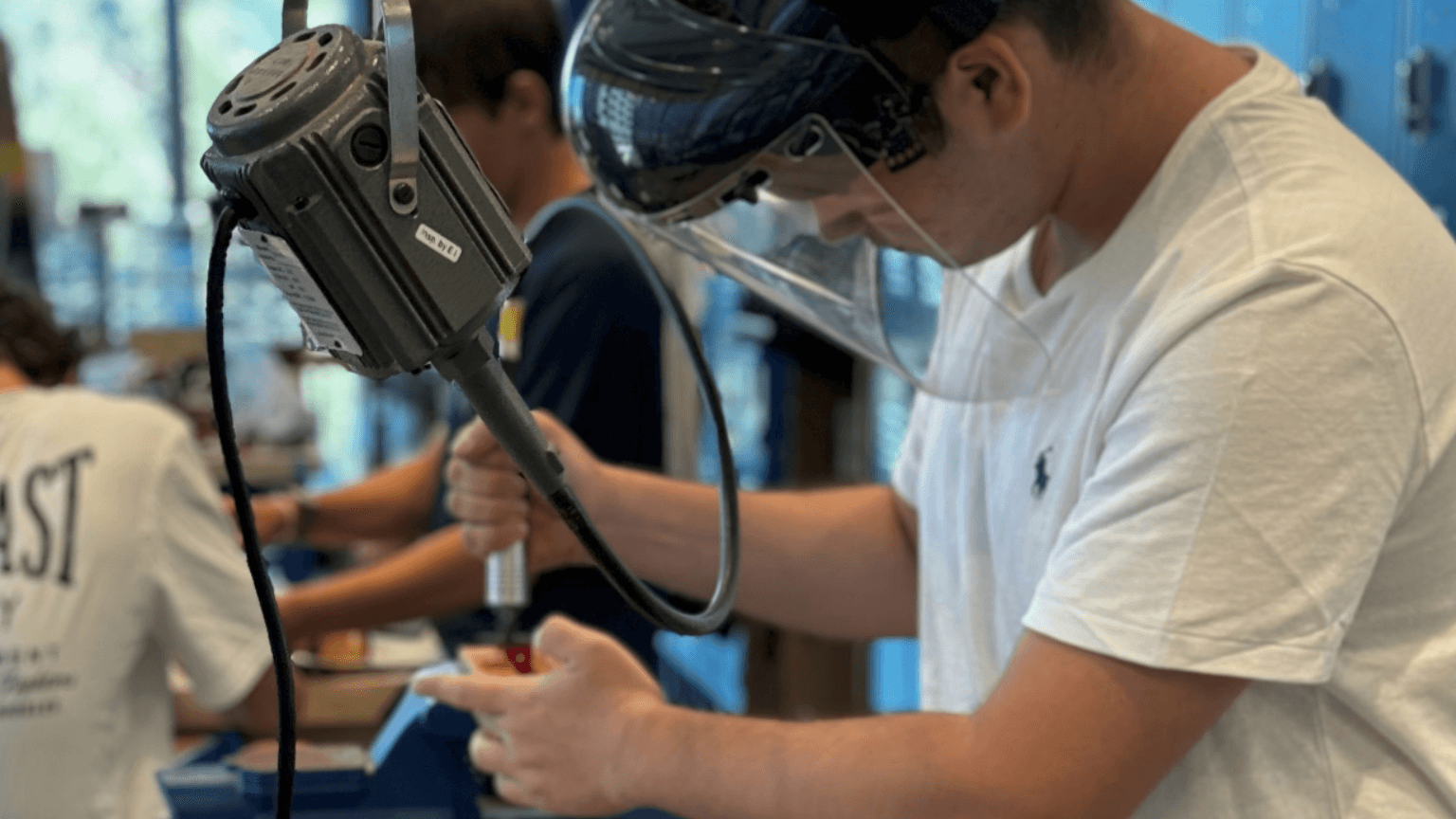
Model performance, develop working drawings, and investigate material properties and structural behavior. Choose materials and manufacturing methods, construct a prototype, and see what testing reveals. Your team will use those results to revise the design while managing time, roles, and technical constraints.
The project focuses on enhanced capabilities for people with special needs. That purpose makes it essential to consider how a solution will be used and whether it serves the intended person. A completed prototype and team presentation bring your research, physical and mathematical principles, planning, construction, and testing into one explanation. Previous trigonometry coursework is helpful but not required.
This three-week full-day academy takes place at UT Austin. Students spend the full program focused on one intensive academy. The academy is available to residential and commuter students. The program is developed by the University of Texas at Austin and offered in partnership with Summer Discovery.
A supplemental course fee of $295 applies.
What You Will Do
• Define a design problem and translate needs into measurable specifications
• Research alternatives and generate multiple engineering concepts
• Model performance and prepare working drawings
• Select materials and manufacturing approaches for a prototype
• Construct, test, and revise a solution for people with special needs
• Present the finished prototype and explain the team’s design decisions
Learning Outcomes
By the end of the course, students will be able to:
• Apply a concept-to-prototype engineering workflow to an open-ended problem
• Use material, structural, and performance evidence to revise a design
• Collaborate on and communicate a tested engineering solution
You’ll leave with your functional team prototype, documented design decisions, and a certificate of completion.
Students receive a University of Texas branded certificate of completion at the end of the program.
Why Engineering Design Skills Matter
Engineering design turns a broad problem into decisions that can be tested. Specifications define what success means, models help teams anticipate performance, and prototypes expose weaknesses that discussion alone may miss. Students learn that revision is evidence of progress, not failure.
Teamwork is part of the technical process. Complex projects require clear roles, shared plans, and communication when tradeoffs appear among materials, cost, time, usability, and performance. These habits support advanced science and mathematics courses as well as future work in engineering, architecture, product design, and technology. They also build confidence in approaching unfamiliar, open-ended problems methodically.
Who Should Attend?
For students who have completed 9th, 10th, 11th, or 12th grade.
If you like building, science, mathematics, or figuring out how a product works, this academy lets you experience the full engineering process. A small team will develop drawings and models, work with materials, test a prototype, and revise under time constraints. Previous trigonometry coursework is helpful but not required.
A school transcript is required.
Your Summer at University of Texas at Austin
Studying on UT Austin’s Forty Acres campus gives high-school students a substantive introduction to academic life in Austin, Texas. Courses draw from popular undergraduate fields and Austin specialties. Full-day academies offer concentrated study, while classes across the program take place in campus classrooms and laboratories and may include guest speakers and fieldwork around Austin.
The experience extends beyond class for both residential and commuting students. Residential students live in Jester Hall, eat at J2, a popular campus dining hall, and take part in activities that may range from a star party at PMA to time at Gregory Gym, Zilker Park, South Congress, or an Austin FC match. Students gain independence, meet peers, and leave with a clearer view of college life, possible directions for future study, and what it can feel like to be a Longhorn.

UT Austin Certificate of Completion
After successfully finishing this course, you will be awarded a certification completion for your accomplishment.
*This is a preview, not what you will receive