
More reasons to enroll early: Save $250 on tuition + 50% off your deposit. Enroll by Oct 31.
Decode social influence through research and podcast storytelling in this 2-week program for high school students on the University of Michigan campus.
Rated 4.5 out of 5 for classroom experience by students who took this course in 2026.
Course Description
A crowd can change the way someone acts. An advertisement can make a promise without saying it aloud. Look closely at familiar moments and the social forces within them.
In this course you will explore conformity, obedience, attribution, social norms, identity, stereotypes, prejudice, gender expectations, and social influence. Groups, relationships, institutions, and daily life provide different settings for asking why people behave as they do.
Classic studies, film and television clips, ads, social media, and public moments become examples to investigate. Identify unwritten rules and the emotional appeal behind a persuasive message. Classic research into helping behavior and conflict between groups invites a closer look at the questions, methods, findings, implications, and ethical concerns behind psychological research.
Create a podcast around a trend, public moment, ad, scene, social-media behavior, or everyday situation. Use at least two concepts and one central question to explain a vivid example. Discussion, practice, and feedback help you distinguish what the example shows from what it cannot prove before sharing the finished work.
This two-week Summer Discovery course for high school students takes place on the University of Michigan campus in Ann Arbor, Michigan. The course is available to residential and commuter students.
What You Will Do
• Identify unwritten social norms across everyday settings
• Analyze conformity, obedience, attribution, and group identity
• Break down persuasive messages and emotional promises
• Evaluate classic studies for methods, findings, and ethics
• Apply social psychology concepts to media and public behavior
• Produce a podcast using two concepts and one central question
Learning Outcomes
By the end of the course, students will be able to:
• Explain how social context and group processes can shape behavior
• Evaluate research and media examples without overstating conclusions
• Use multiple social psychology concepts to explain a social situation
You’ll leave with your completed podcast and a certificate of completion.
Why Social Psychology Skills Matter
Social psychology helps students see how context, group identity, norms, and authority can influence behavior without erasing individual agency. Comparing concepts gives them more than one way to interpret a social situation.
Research and media analysis add discipline. Students ask how a classic finding was produced, whether ethical limits matter, and whether an example actually proves the claim being made. These habits strengthen media literacy, empathy, argument, and responsible communication.
Who Should Attend?
For students who have completed 9th, 10th, 11th, or 12th grade.
If you notice how people act differently in a group, or wonder why a message persuades, this course gives those observations a research context. It connects psychology with media, identity, marketing, and everyday behavior. You’ll analyze studies and media and develop an audio project. Sensitive social topics are part of the discussion, alongside attention to what the evidence supports.
Recommended by More Than 9 out of 10 Students
Based on students surveyed in Summer Discovery’s 2026 program at the University of Michigan.
Your Summer at University of Michigan
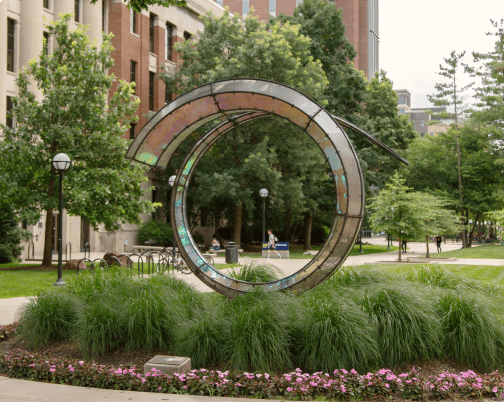
Programs on the University of Michigan campus give high-school students the experience of exploring an academic interest in Ann Arbor, a college town where campus and community life blend together. Tree-lined streets, downtown bookstores and cafés, the Nichols Arboretum, and trails near the Huron River create different ways to experience the setting beyond class.
Students learn alongside peers, navigate a large and active campus, and gain independence through everyday choices in a new environment. The experience helps students understand what university life can feel like while giving them space to deepen an interest without having every next step decided. For families, the program offers a meaningful combination of academic depth, community, personal growth, and clearer direction about what a student may want to study or pursue next.
After successfully finishing this course, you will be awarded a certification completion for your accomplishment.
*This is a preview, not what you will receive