
More reasons to enroll early: Save $250 on tuition + 50% off your deposit. Enroll by Oct 31.
Build a personal plan for budgeting, credit, saving, and investing in this 2-week program for high school students on the University of Michigan campus.
Rated 4.2 out of 5 for classroom experience by students who took this course in 2026.
Course Description
A future salary can look generous until housing, transportation, and other choices enter the picture. Build a plan that shows how the pieces fit and what your goals require.
In this course you will examine budgeting, saving, credit, debt, investing, and entrepreneurship. Compare stocks, bonds, commodities, and major exchanges, and see how compounding and interest rates change outcomes over time. Using simulated money, test investment preferences and compare the effect of starting at different ages.
Personal goals and values matter alongside the numbers. Explore responsible credit, financial integrity, and transparency, and consider how corporations manage capital. Those discussions reveal tradeoffs in both personal and business decisions.
Individually or with a group, develop a personal financial plan for a future scenario. Research a career and realistic salary, set goals, and build a monthly budget. Include savings, an emergency fund, credit and debt management, and an investing strategy. Housing, transportation, and a side-business idea complete the picture. Presenting the plan asks you to show how the pieces fit and which assumptions need another look.
This two-week Summer Discovery course for high school students takes place on the University of Michigan campus in Ann Arbor, Michigan. Residential and commuter options are available.
What You Will Do
• Model how compound interest changes long-term outcomes
• Compare stocks, bonds, commodities, and major exchanges
• Develop a monthly budget from a researched career salary
• Plan savings, an emergency fund, credit, and debt management
• Test investment choices using simulated money
• Create and present a comprehensive personal financial plan
Learning Outcomes
By the end of the course, students will be able to:
• Explain how budgeting, credit, debt, saving, and investing connect
• Evaluate financial choices using goals, time horizon, and relevant tradeoffs
• Develop a realistic long-term personal financial plan
You’ll leave with your completed financial plan and a certificate of completion.
Why Personal Finance Skills Matter
A budget makes priorities visible: projected spending has to fit the income behind it. Savings, credit, and investing then add the effect of time, so a small change in an assumption can reshape the plan.
Working through the connections helps you explain a choice rather than treat each decision separately. You can bring that habit to future financial questions, checking the numbers and the tradeoffs before deciding what fits your goals.
Who Should Attend?
For students who have completed 9th, 10th, 11th, or 12th grade.
If you want to understand how a salary turns into a budget, savings, and choices about the future, this course makes those connections concrete. Investing and entrepreneurship sit alongside the everyday decisions that affect a financial plan.
You’ll work with realistic income and expense assumptions, use basic calculations, and compare options. Investment exercises use simulated money.
Recommended by More Than 9 out of 10 Students
Based on students surveyed in Summer Discovery’s 2026 program at the University of Michigan.
Your Summer at University of Michigan
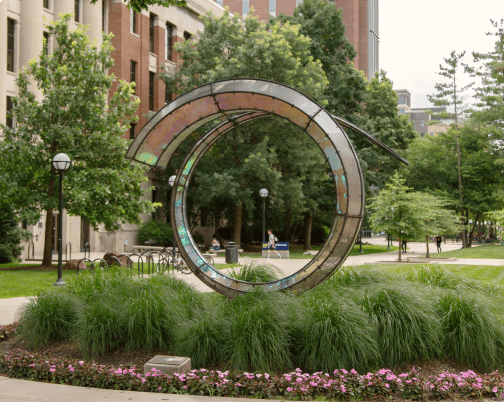
Programs on the University of Michigan campus give high-school students the experience of exploring an academic interest in Ann Arbor, a college town where campus and community life blend together. Tree-lined streets, downtown bookstores and cafés, the Nichols Arboretum, and trails near the Huron River create different ways to experience the setting beyond class.
Students learn alongside peers, navigate a large and active campus, and gain independence through everyday choices in a new environment. The experience helps students understand what university life can feel like while giving them space to deepen an interest without having every next step decided. For families, the program offers a meaningful combination of academic depth, community, personal growth, and clearer direction about what a student may want to study or pursue next.
After successfully finishing this course, you will be awarded a certification completion for your accomplishment.
*This is a preview, not what you will receive