
More reasons to enroll early: Save $250 on tuition + 50% off your deposit. Enroll by Oct 31.
Build a case and argue it in mock court in this 2-week program for high school students on the University of Michigan campus.
Course Description
A well-chosen question can change how a jury sees the evidence. Prepare a case with your team, then respond as the other side puts your argument to the test.
In this course you will examine the responsibilities of attorneys, defendants, witnesses, judges, and jurors, then study how legal teams prepare a hypothetical case. Jury selection and voir dire introduce the questions advocates use to understand a potential jury.
Working with your team from a mock-trial packet, you’ll develop opening and closing statements, prepare direct and cross-examination questions, and learn when evidence may be introduced or challenged. Try an objection, respond to an opponent, and revise your strategy as the case takes shape.
The final mock trial puts that preparation into motion. Present arguments, question witnesses, manage exhibits, and respond in real time within courtroom procedure. Feedback and reflection help you see how your argument worked and where it needed a different approach. The work connects critical thinking with the teamwork and speaking that advocacy requires.
This two-week Summer Discovery course for high school students takes place on the University of Michigan campus in Ann Arbor, Michigan. Residential and commuter options are available.
What You Will Do
• Analyze the roles of attorneys, witnesses, judges, and jurors
• Practice jury selection and the voir dire process
• Develop persuasive opening and closing statements
• Write direct and cross-examination questions
• Introduce evidence and make appropriate objections
• Prepare and conduct a collaborative mock trial
Learning Outcomes
By the end of the course, students will be able to:
• Explain the roles, sequence, and strategic choices within a trial
• Build questions and arguments from a hypothetical case record
• Adapt an evidence-based argument in response to testimony and objections
You’ll leave with your prepared courtroom materials and a certificate of completion.
Why Mock Trial Skills Matter
Mock trial teaches students to build an argument within rules. They must connect facts to a theory of the case, decide which questions will develop useful testimony, and anticipate how the other side may respond. Precision matters because a vague claim or poorly framed question can weaken the whole strategy.
Courtroom practice also builds composure and listening. Students adapt when a witness answers unexpectedly, make or answer objections, and communicate with a judge and jury. These skills transfer to presentations, debate, leadership, and any setting where evidence must be explained under pressure.
Who Should Attend?
For students who have completed 9th, 10th, 11th, or 12th grade.
If you enjoy debate, acting, or figuring out how to make an argument hold up, mock trial puts those interests into a shared case. You’ll see both the preparation behind a strategy and the challenge of using it live. Reading a case packet, taking an assigned role, questioning witnesses, and speaking before classmates are central to the experience.
Recommended by More Than 9 out of 10 Students
Based on students surveyed in Summer Discovery’s 2026 program at the University of Michigan.
Your Summer at University of Michigan
Programs on the University of Michigan campus give high-school students the experience of exploring an academic interest in Ann Arbor, a college town where campus and community life blend together. Tree-lined streets, downtown bookstores and cafés, the Nichols Arboretum, and trails near the Huron River create different ways to experience the setting beyond class.
Students learn alongside peers, navigate a large and active campus, and gain independence through everyday choices in a new environment. The experience helps students understand what university life can feel like while giving them space to deepen an interest without having every next step decided. For families, the program offers a meaningful combination of academic depth, community, personal growth, and clearer direction about what a student may want to study or pursue next.
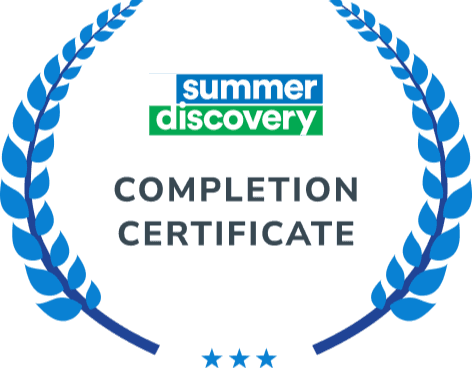
After successfully finishing this course, you will be awarded a certification completion for your accomplishment.
*This is a preview, not what you will receive