
More reasons to enroll early: Save $250 on tuition + 50% off your deposit. Enroll by Oct 31.
Design, build, and test a miniature calorimeter in this 2-week program for high school students on the University of Michigan campus.
One of our most popular courses in 2026, based on enrollment.
Course Description
Build a miniature calorimeter, then see what testing reveals about your design. Heat, materials, and a working device give the physics something you can measure.
In this course you will connect structural and materials analysis, design, manufacturing, electricity, thermodynamics, and heat transfer with mechanical engineering. Lectures explore how those principles apply to machines, energy conversion, transportation, and production.
Try levers and pulleys, compare materials, build circuits, and test heat transfer and insulation. Simulations and workshops let you compare a mathematical or physical model with what a real system does. Peer feedback adds another view as you revise your approach.
Your final project is a functional miniature calorimeter, a device for measuring heat transfer. Develop a design, build a prototype, and use test results to improve it, documenting challenges and choices along the way. In the final presentation, explain how physics and thermodynamics shaped the device, how it performed, and what you changed after testing. Discussion and feedback help you strengthen that reasoning.
This two-week Summer Discovery course takes place on the University of Michigan campus in Ann Arbor, Michigan. The course is available to residential and commuter students.
A supplemental course fee of $95 applies.
What You Will Do
• Test foundational physics principles through levers and pulleys
• Compare materials for structural and design decisions
• Build circuits for an introductory mechanical system
• Experiment with heat transfer and insulation
• Design, prototype, and test a miniature calorimeter
• Present system performance and explain design revisions
Learning Outcomes
By the end of the course, students will be able to:
• Apply physics, materials, electricity, and thermodynamics to engineering problems
• Build and test a functional device against defined performance criteria
• Explain an iterative design process using evidence from prototype testing
You’ll leave with your functional calorimeter prototype, design documentation, and a certificate of completion.
Why Mechanical Engineering Skills Matter
Mechanical engineering requires students to connect theory with measurable performance. A design must account for forces, materials, energy, electricity, manufacturing, and the way components interact.
Building and testing a device makes iteration unavoidable. Students identify why a prototype misses its specifications, adjust the design, and document the evidence behind the change. These habits strengthen quantitative reasoning, creativity, troubleshooting, and engineering communication.
Who Should Attend?
For students who have completed 9th, 10th, 11th, or 12th grade.
Building a device and working out why it behaves as it does are central to this course. Students drawn to physics, structures, materials, energy, manufacturing, or design can explore those interests through experiments and a prototype. You’ll use quantitative reasoning, build circuits, troubleshoot, and explain revisions in a presentation. A failed test can give you a useful reason to try something differently.
Recommended by More Than 9 out of 10 Students
Based on students surveyed in Summer Discovery’s 2026 program at the University of Michigan.
Your Summer at University of Michigan
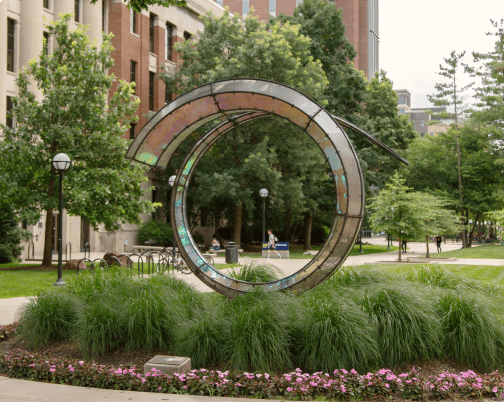
Programs on the University of Michigan campus give high-school students the experience of exploring an academic interest in Ann Arbor, a college town where campus and community life blend together. Tree-lined streets, downtown bookstores and cafés, the Nichols Arboretum, and trails near the Huron River create different ways to experience the setting beyond class.
Students learn alongside peers, navigate a large and active campus, and gain independence through everyday choices in a new environment. The experience helps students understand what university life can feel like while giving them space to deepen an interest without having every next step decided. For families, the program offers a meaningful combination of academic depth, community, personal growth, and clearer direction about what a student may want to study or pursue next.
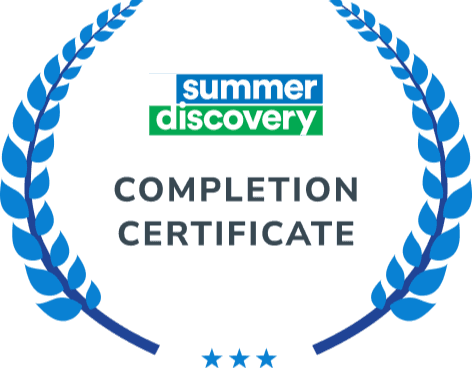
After successfully finishing this course, you will be awarded a certification completion for your accomplishment.
*This is a preview, not what you will receive