
More reasons to enroll early: Save $250 on tuition + 50% off your deposit. Enroll by Oct 31.
Investigate a mock crime scene from evidence to report in this 2-week program for high school students on the University of Michigan campus.
Rated 4.3 out of 5 for overall experience by students surveyed across the broader program in 2026.
Course Description
A scene holds many kinds of evidence. The investigator’s job is to connect them without asking a clue to prove more than it can.
In this course you will explore crime-scene tools and techniques, with documentation and preservation protecting the value of later analysis. Follow the chain of custody to show who handled evidence and when. Hands-on work includes fingerprints, fibers, DNA, bloodstain patterns, firearms evidence, toxicology, ballistics, and digital forensics, alongside diagrams, sketches, and photography.
Photographic and physical lineup procedures bring another kind of judgment into the investigation. Consider respectful witness interviews and the constitutional boundaries around questioning suspects.
With a team, investigate a mock crime scene, interview a witness, and collect and analyze several forms of evidence. Your report brings together findings, diagrams, photographs, and reasoned conclusions. Present the process and interpretation, explain what the evidence cannot establish, and use questions and feedback to check your reasoning. The work connects scientific methods with the legal and human responsibilities of an investigation.
This two-week Summer Discovery course for high school students takes place on the University of Michigan campus in Ann Arbor, Michigan. The course is available to residential and commuter students.
A supplemental course fee of $95 applies.
What You Will Do
• Document a mock scene through notes, sketches, diagrams, and photography
• Preserve evidence and maintain a clear chain of custody
• Analyze fingerprints, fibers, DNA, and bloodstain patterns
• Examine ballistics, toxicology, and digital evidence
• Practice respectful witness interviewing and lineup procedures
• Compile and present a comprehensive investigation report
Learning Outcomes
By the end of the course, students will be able to:
• Explain how documentation and evidence preservation support a credible investigation
• Compare what different evidence types contribute to a case
• Support an investigative conclusion while explaining evidentiary and legal limits
You’ll leave with your completed forensic analyses, team investigation report and a certificate of completion.
Why Forensic Investigation Skills Matter
Forensic science depends on the integrity of both evidence and process. A result can lose meaning if a scene is poorly documented, a sample is mishandled, or chain of custody is unclear. Students learn why careful procedure supports credible conclusions.
Interviewing and lineup topics add legal and human responsibility. Students consider how investigators can gather information without retraumatizing witnesses or disregarding constitutional rights. These skills strengthen scientific reasoning, documentation, empathy, and ethical judgment.
Who Should Attend?
For students who have completed 9th, 10th, 11th, or 12th grade.
If you enjoy noticing details and working out what they mean together, this course puts that interest into a mock investigation. Biology, chemistry, digital evidence, and law offer different ways into the subject. The work includes sensitive scenarios, precise documentation, team investigation, and presenting findings. Careful treatment of witnesses and evidence is part of what makes the process credible.
Recommended by More Than 9 out of 10 Students
Based on students surveyed in Summer Discovery’s 2026 program at the University of Michigan.
Your Summer at University of Michigan
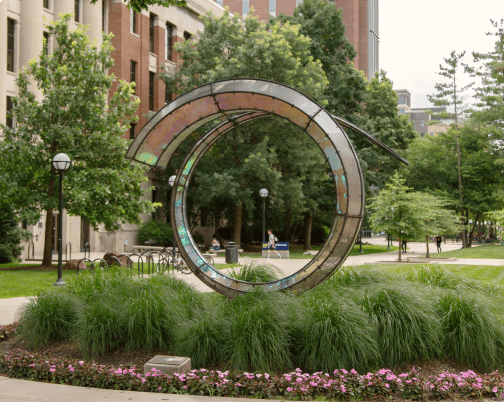
Programs on the University of Michigan campus give high-school students the experience of exploring an academic interest in Ann Arbor, a college town where campus and community life blend together. Tree-lined streets, downtown bookstores and cafés, the Nichols Arboretum, and trails near the Huron River create different ways to experience the setting beyond class.
Students learn alongside peers, navigate a large and active campus, and gain independence through everyday choices in a new environment. The experience helps students understand what university life can feel like while giving them space to deepen an interest without having every next step decided. For families, the program offers a meaningful combination of academic depth, community, personal growth, and clearer direction about what a student may want to study or pursue next.
After successfully finishing this course, you will be awarded a certification completion for your accomplishment.
*This is a preview, not what you will receive