
More reasons to enroll early: Save $250 on tuition + 50% off your deposit. Enroll by Oct 31.
Analyze a landmark decision and its future consequences in this 2-week program for high school students on the University of Michigan campus.
Rated 4.5 out of 5 for classroom experience by students who took this course in 2026.
Course Description
A court decision can keep shaping people’s lives long after the case ends. Trace the reasoning behind a ruling, then consider what it could mean for the next case.
In this course you will examine the American criminal justice system from the perspectives of courts, law enforcement, victims, offenders, and different communities. English common law and constitutional law connect with questions affecting high school and college students.
Readings, discussions, and problems address academic integrity, substance use, social media and reputation, bullying, and a teenager’s place in the legal system. Compare facts with competing interpretations and consider how race, age, gender, politics, and institutional roles affect experiences of justice.
For your landmark-case project, choose a criminal court decision, with or without a related Supreme Court ruling. Research its background, verdict, reasoning, and social impact. Then use the precedent to predict how later decisions could affect society. A multimedia presentation gives you a way to explain the analysis and show the legal evidence behind your prediction.
This two-week Summer Discovery course for high school students takes place on the University of Michigan campus in Ann Arbor, Michigan. The course is available to residential and commuter students.
What You Will Do
• Map perspectives within the American criminal justice system
• Examine how common law and constitutional law evolved
• Discuss legal dilemmas involving students and social media
• Research the background and reasoning of landmark decisions
• Evaluate how a verdict changed behavior or institutions
• Present a precedent-based prediction through multimedia
Learning Outcomes
By the end of the course, students will be able to:
• Explain how courts, law enforcement, victims, and offenders interact within criminal justice
• Analyze a landmark decision through facts, reasoning, precedent, and social impact
• Support a prediction about future cases using legal precedent
You’ll leave with your completed landmark-case analysis and a certificate of completion.
Why Legal Reasoning Skills Matter
Legal reasoning helps students distinguish facts, interpretations, rules, and consequences. Landmark decisions show how a court’s reasoning can shape institutions and individual conduct long after a case ends.
Examining multiple perspectives also strengthens civic judgment. Students consider how legal systems affect different groups, why subjective truth may conflict with objective facts, and how precedent constrains future decisions. These habits support research, argument, and informed participation in public life.
Who Should Attend?
For students who have completed 9th, 10th, 11th, or 12th grade.
Court decisions can raise as many questions as they settle. For students curious about how judges reached a ruling and who it will affect, this course offers a way to investigate. It connects interests in law, government, history, policy, and civic debate. You’ll read legal material, compare contested perspectives, research a landmark case, and explain your analysis through a multimedia presentation.
Recommended by More Than 9 out of 10 Students
Based on students surveyed in Summer Discovery’s 2026 program at the University of Michigan.
Your Summer at University of Michigan
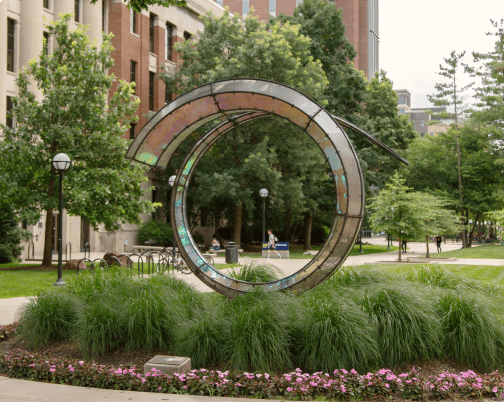
Programs on the University of Michigan campus give high-school students the experience of exploring an academic interest in Ann Arbor, a college town where campus and community life blend together. Tree-lined streets, downtown bookstores and cafés, the Nichols Arboretum, and trails near the Huron River create different ways to experience the setting beyond class.
Students learn alongside peers, navigate a large and active campus, and gain independence through everyday choices in a new environment. The experience helps students understand what university life can feel like while giving them space to deepen an interest without having every next step decided. For families, the program offers a meaningful combination of academic depth, community, personal growth, and clearer direction about what a student may want to study or pursue next.
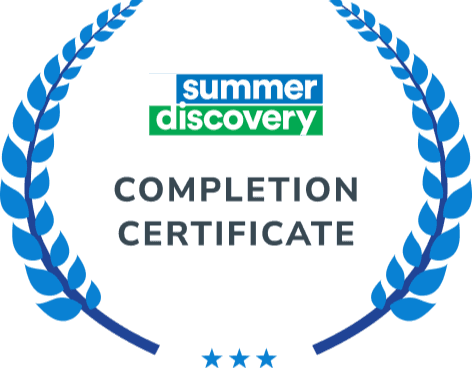
After successfully finishing this course, you will be awarded a certification completion for your accomplishment.
*This is a preview, not what you will receive