
More reasons to enroll early: Save $250 on tuition + 50% off your deposit. Enroll by Oct 31.
Explore engineering careers and build a team prototype in this two-week course for high school students on the University of Michigan campus.
Course Description
Engineering can mean designing a machine, rethinking infrastructure, or developing a medical device. Compare the paths, then try a design project in a specialty that interests you.
In this course you will explore mechanical, aerospace, robotics, civil, biomedical, and systems engineering. Compare the coursework, extracurricular preparation, professional training, and everyday responsibilities behind different careers. Guest speakers bring perspectives from industry, research, government, and entrepreneurship.
Discussions connect those roles with sustainable design, space exploration, automation, public safety, materials innovation, and the effects of engineering on people and the environment. The choices involve more than whether a design works: costs, limits, and consequences matter too.
With a team, choose a discipline and take a real-world problem from concept through prototype and presentation. Define technical requirements, weigh constraints and tradeoffs, test, and improve the design. Connect the specialty with work in research, design, manufacturing, consulting, or startups. Present the project and your interest in that path, then use feedback to strengthen the reasoning behind it.
This two-week Summer Discovery course for high school students takes place on the University of Michigan campus in Ann Arbor, Michigan. The course is available to residential and commuter students.
What You Will Do
• Compare training, responsibilities, and daily work across engineering disciplines
• Examine sustainability, safety, ethics, and innovation questions engineers face
• Research design, manufacturing, consulting, and entrepreneurial engineering roles
• Define requirements, constraints, and trade-offs for a real-world problem
• Design, prototype, test, and improve a team engineering solution
• Present the project and a researched engineering career pathway
Learning Outcomes
By the end of the course, students will be able to:
• Compare engineering disciplines by training, responsibilities, and professional pathways
• Use requirements, constraints, and test results to guide engineering design
• Evaluate a design’s implications for safety, sustainability, and the people affected
You’ll leave with your team’s completed design project and a certificate of completion.
Why Engineering Skills Matter
Engineering career exploration helps students distinguish disciplines that require different training, tools, and ways of thinking. Aerospace design may rely heavily on physics and modeling, while mechanical engineering often centers on prototyping, testing, and iteration. Comparing these pathways can make future academic choices and continued exploration more informed.
Sustainability, safety, ethics, and innovation add context beyond job titles. Students see how engineers work within limits involving budget, materials, physics, and human impact. Project-based design develops planning, systems thinking, technical judgment, and communication. It also teaches students to revise a design when evidence or test results change the picture.
Who Should Attend?
For students who have completed 9th, 10th, 11th, or 12th grade.
If you like figuring out how things are designed, built, tested, and improved, this course helps you compare different kinds of engineering. You’ll research pathways and work through a hands-on team project before explaining your choices. No prior engineering coursework is required. It’s a way to explore several directions before deciding which questions you want to pursue further.
Recommended by More Than 9 out of 10 Students
Based on students surveyed in Summer Discovery’s 2026 program at the University of Michigan.
Your Summer at University of Michigan
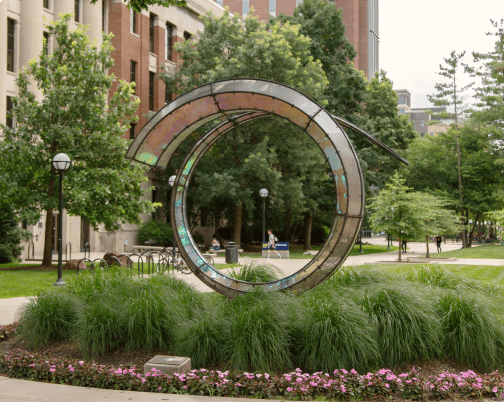
Programs on the University of Michigan campus give high-school students the experience of exploring an academic interest in Ann Arbor, a college town where campus and community life blend together. Tree-lined streets, downtown bookstores and cafés, the Nichols Arboretum, and trails near the Huron River create different ways to experience the setting beyond class.
Students learn alongside peers, navigate a large and active campus, and gain independence through everyday choices in a new environment. The experience helps students understand what university life can feel like while giving them space to deepen an interest without having every next step decided. For families, the program offers a meaningful combination of academic depth, community, personal growth, and clearer direction about what a student may want to study or pursue next.
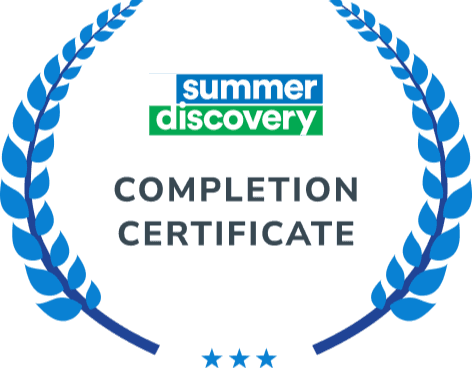
After successfully finishing this course, you will be awarded a certification completion for your accomplishment.
*This is a preview, not what you will receive