
More reasons to enroll early: Save $250 on tuition + 50% off your deposit. Enroll by Oct 31.
Investigate the brain through experiments and research in this 2-week program for high school students on the University of Michigan campus.
One of our most popular courses in 2026, based on enrollment.
Course Description
Tracing a shape in a mirror can make a familiar movement unexpectedly difficult. Moments like that open up questions about how the brain learns, adapts, and guides behavior.
In this course you will investigate the connections among electrical signals, chemical processes, genes, and experience. Model neurons, simulate impulse conduction and action potentials, and map brain regions, including the effects of lobe damage. These activities put brain structure and communication into view.
Test neuroplasticity, the brain’s capacity to change, through mirror tracing. Measure reaction time, reflexes, and preferences for one side of the body. Compare repetition, deep processing, and chunking as memory strategies. Sensation, perception, language, decision-making, and emerging research extend the questions from biological mechanisms to observable behavior.
For a systematic research review, choose an area of biopsychology or neuroscience and examine primary studies. Identify gaps in current knowledge and, if appropriate, propose an experiment. Organize your review into methods, results, discussion, and references, then explain the evidence and future direction in a research report and presentation. It’s a substantial introduction to reading and communicating scientific research.
This two-week Summer Discovery course for high school students takes place on the University of Michigan campus in Ann Arbor, Michigan. Residential and commuter options are available.
What You Will Do
• Model neuronal structure and simulate action-potential conduction
• Map brain regions and investigate effects of lobe damage
• Test neuroplasticity through a mirror-tracing activity
• Measure reaction time, reflexes, and lateral preferences
• Compare memory strategies including repetition and deep processing
• Complete and present a systematic review of current neuroscience research
Learning Outcomes
By the end of the course, students will be able to:
• Explain how neuronal communication and brain systems support behavior
• Analyze learning, memory, perception, and cognition through biological evidence
• Synthesize primary research and identify a meaningful gap for future study
You’ll leave with your completed experimental activities, scientific review, presentation, and a certificate of completion.
Why Neuroscience Skills Matter
A memory or a reaction can be examined at several levels, from communication between neurons to behavior you can observe. Models and experiments help connect those explanations rather than leave the biology as a list of facts.
Reviewing primary studies adds a different challenge: decide what the evidence supports and what remains unanswered. That habit strengthens scientific reading and gives a new research question a reason to exist.
Who Should Attend?
For students who have completed 9th, 10th, 11th, or 12th grade.
If you’re curious about how the brain produces a memory, a movement, or a decision, this course lets you explore the biology behind the question. Hands-on demonstrations sit alongside close reading of scientific studies.
The capstone requires sustained work with primary research sources. You’ll also collect and interpret simple data, collaborate on activities, and work through biological mechanisms. It’s a fit if you want to try the reading as well as the experiments involved in neuroscience.
Recommended by More Than 9 out of 10 Students
Based on students surveyed in Summer Discovery’s 2026 program at the University of Michigan.
Your Summer at University of Michigan
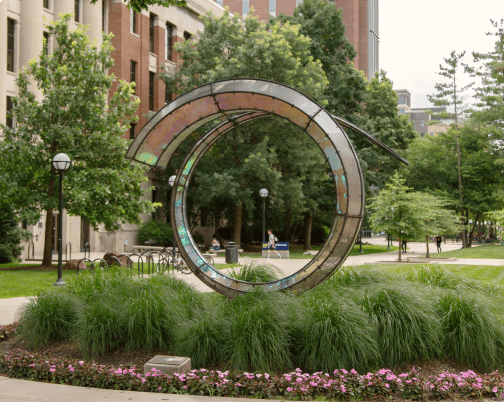
Programs on the University of Michigan campus give high-school students the experience of exploring an academic interest in Ann Arbor, a college town where campus and community life blend together. Tree-lined streets, downtown bookstores and cafés, the Nichols Arboretum, and trails near the Huron River create different ways to experience the setting beyond class.
Students learn alongside peers, navigate a large and active campus, and gain independence through everyday choices in a new environment. The experience helps students understand what university life can feel like while giving them space to deepen an interest without having every next step decided. For families, the program offers a meaningful combination of academic depth, community, personal growth, and clearer direction about what a student may want to study or pursue next.
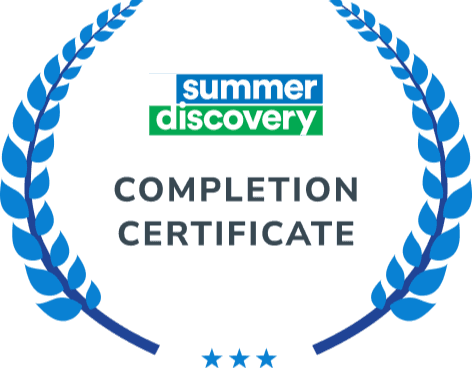
After successfully finishing this course, you will be awarded a certification completion for your accomplishment.
*This is a preview, not what you will receive