
More reasons to enroll early: Save $250 on tuition + 50% off your deposit. Enroll by Oct 31.
Build and pitch a startup in this 2-week entrepreneurship program for high school students on UCLA’s campus.
Seats are limited, and this course may sell out for summer 2027. Enroll early to save your seat.
Course Description
A startup idea becomes more useful when someone tests the problem behind it. Find out what potential customers need, then see how your team’s idea measures up.
In this course you will identify a real need, write a focused problem statement, and conduct customer discovery through interviews or surveys. Research customers and competitors, then use a business-planning tool called a Lean Canvas to connect the pieces of your venture. Choose ways to reach customers and make a simple marketing plan.
A minimum viable product lets people react to something concrete: a paper prototype, digital mock-up, or other workable concept. Unit economics, pricing, cost structure, break-even analysis, and a basic financial model show what the idea would need to work financially.
Build a value proposition and investor pitch deck, rehearse your story, and use feedback to refine it. In a Shark Tank-style showcase, your team will present its prototype, business model, financial reasoning, and customer evidence, then take live questions. A written reflection helps you identify what you learned while working together as founders.
This two-week full-day academy for high school students takes place at UCLA in Los Angeles, California. The program is developed by UCLA and offered in partnership with Summer Discovery. Students focus on one intensive academy for the full program. Residential and commuter options are available.
What You Will Do
• Define a real problem for a startup to solve
• Interview or survey potential customers and build target personas
• Map competitors and complete a Lean Canvas business model
• Create a prototype or minimum viable product mock-up
• Calculate pricing, costs, margins, and a basic break-even model
• Build and deliver a Shark Tank-style investor pitch
Learning Outcomes
By the end of the course, students will be able to:
• Evaluate a startup problem using customer and competitor evidence
• Explain how product, marketing, and financial choices fit a business model
• Support a venture recommendation with evidence and clear reasoning
You’ll leave with your team’s venture portfolio of customer findings, prototype, business and financial models, pitch deck and a certificate of completion.
Why Entrepreneurship Skills Matter
Entrepreneurship teaches students to treat an idea as a set of questions to investigate. Is the problem real for a defined group? What alternatives already exist? Can a solution be tested before a team spends heavily? Customer interviews and competitor research replace assumption with evidence.
A Lean Canvas helps students see how customers, value, costs, revenue, and delivery fit together. Prototyping makes feedback easier because people can react to something concrete. Financial modeling introduces the consequences of pricing and cost decisions, while pitching develops clarity under pressure. These skills support innovation in business, technology, health, social impact, and other fields where teams must build, test, and communicate new solutions.
Who Should Attend?
For students who have completed 9th, 10th, 11th, or 12th grade.
If you notice problems and imagine products or services that could help, this academy lets you try what happens after the idea. You’ll interview people, share unfinished work, work through numbers, and divide responsibilities with a team. Direct feedback can change the concept. Trying customer research, product development, strategy, finance, branding, and pitching helps you discover which role interests you most.
Recommended by More Than 4 out of 5 Students
Based on students surveyed in Summer Discovery’s 2026 UCLA high school program.
Your Summer at UCLA
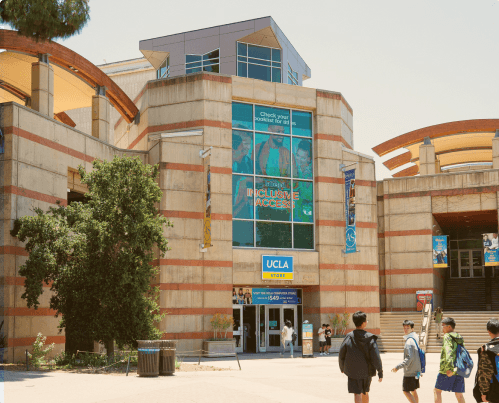
UCLA gives high-school students the opportunity to explore an academic interest while experiencing university life in Los Angeles, a city where entertainment, technology, business, science, and culture constantly intersect. The campus has its own community and rhythm while connecting students to a wider environment built around creativity and new ideas.
Students learn alongside peers, navigate a large campus, and gain independence through everyday choices and responsibilities. Time outside class expands the experience through friendships, campus life, and opportunities to notice which subjects and settings hold their attention. For families, UCLA offers a valuable combination of substantive academics, personal growth, and clearer direction about what a student may want to study, experience more deeply, or pursue next.
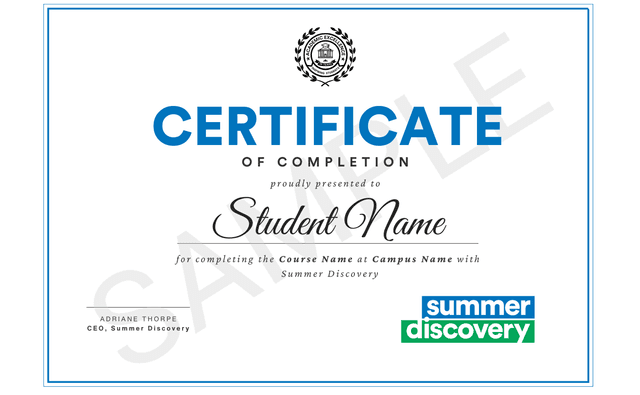
Summer Discovery Certificate of Completion
After successfully finishing this course, you will be awarded a certification completion for your accomplishment.
*This is a preview, not what you will receive