
More reasons to enroll early: Save $250 on tuition + 50% off your deposit. Enroll by Oct 31.
Investigate thought, emotion, and behavior in this 3-week psychology program for middle school students at UCLA.
Course Description
A habit, a memory, or a burst of emotion can become a question about the mind. Models, games, and creative projects give your student ways to investigate.
In this course your student will build a brain model, compare psychology myths with evidence, and try a game showing how repeated experiences can shape a learned response. Major theories introduce ways of explaining thought and behavior. A lifespan timeline explores development, while emotion charades and nature-versus-nurture discussions connect biology, experience, and social situations.
Making a stress ball and exploring calm-down tools bring ideas about stress into everyday view; the course is not therapy. Age-appropriate discussion introduces mental health and common psychological disorders, alongside uses of psychology in schools, sports, counseling, and other settings.
Mini case-study skits ask teams to apply what they’ve learned to realistic situations. For a final project, your student will choose a real-life question and explain it through art, a skit, video, or a short presentation. There’s room to be creative while looking for evidence behind an explanation.
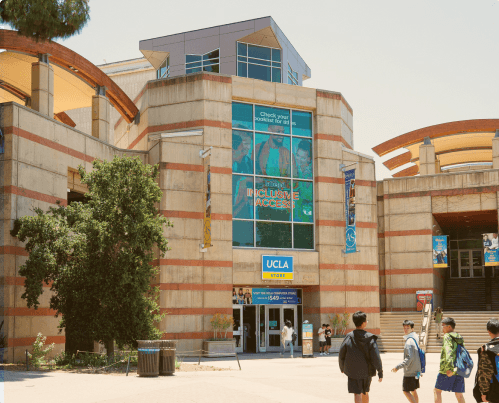
This three-week course for middle school students takes place at UCLA in Los Angeles, California. The program is developed by UCLA and offered in partnership with Summer Discovery. Residential and commuter options are available.
What You Will Do
• Build a brain model and compare psychology myths with evidence
• Explore simplified ideas from major psychological theories
• Test learning and conditioning concepts through an interactive game
• Examine development, emotion, social behavior, and nature versus nurture
• Discuss stress, mental health, and psychological disorders at an age-appropriate level
• Present a real-life psychology question through art, video, skit, or slides
Learning Outcomes
By the end of the course, students will be able to:
• Explain connections between the brain, behavior, emotions, and development
• Use psychological ideas to explain an age-appropriate everyday situation
• Support an explanation about behavior with evidence rather than assumptions
You’ll leave with your final psychology project and a certificate of completion.
Why Psychology Skills Matter
Psychology gives students tools for asking careful questions about behavior instead of relying on assumptions. Comparing theories, myths, and observations helps them separate a plausible explanation from one that has evidence behind it. Development and nature-versus-nurture discussions also show why the same behavior can have more than one influence.
Applying concepts through models, games, case skits, and presentations strengthens analysis and communication. Students practice describing patterns without diagnosing classmates or treating a single example as a rule. That restraint is part of responsible psychological thinking and can support more thoughtful decisions in school, teamwork, relationships, and future study.
Who Should Attend?
For students who have completed 6th, 7th, or 8th grade.
For students who wonder why habits stick or why people react differently, this course offers several ways to explore. Your student can work through ideas in discussion, games, models, and a creative project about a question they choose. No previous psychology coursework is required.
The course includes age-appropriate conversations about mental health. It is an educational experience, not therapy or practice diagnosing classmates.
Your Summer at UCLA
UCLA gives middle-school students an energetic place to learn, have fun, and experience campus life in Los Angeles. The setting brings together science, technology, creativity, entertainment, and culture, helping new subjects feel connected to a wider world of ideas.
The program combines hands-on academics with friendships, campus activities, clear routines, and support as students become comfortable in a large university environment. Students can try new challenges, share interests with peers, and build confidence through participation without needing to decide where those interests will lead. For families, UCLA offers a structured middle-school experience that balances substantive learning with fun, community, and age-appropriate independence. Students leave with new memories and a clearer sense of what they may want to explore next.
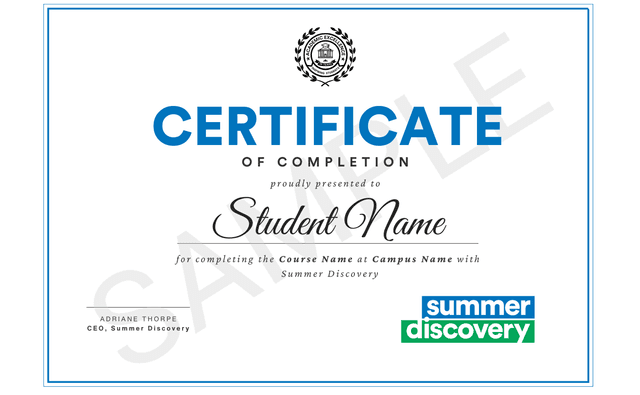
Summer Discovery Certificate of Completion
After successfully finishing this course, you will be awarded a certification of completion for your accomplishment.
*This is a preview, not what you will receive