
More reasons to enroll early: Save $250 on tuition + 50% off your deposit. Enroll by Oct 31.
Analyze cases and preserve evidence in this 2-week forensic science program for high school students on UCLA’s campus.
Course Description
A DNA result can change a case, but only if investigators can explain where the evidence came from and what the test supports. Follow that connection between a crime lab and a courtroom.
In this course you will examine how laboratories identify physical evidence and investigate its origin. Homicide cases connect scientific work with criminal and civil law, search and seizure, interviews, and the penal code. DNA analysis and the Innocence Project’s work challenging wrongful convictions show both the power of evidence and the consequences of poor laboratory practice.
Chain-of-custody work tracks evidence as it moves, with documentation, contamination prevention, and accountability at every step. Compare presumptive tests, which suggest a possibility, with confirmatory tests and laboratory reports that support a conclusion.
A step-by-step process guides students through securing the scene, separating witnesses, surveying and documenting the area, searching, and securing evidence. Consider tools from markers and forceps to alternate light sources, sifting screens, and digital-forensics software. Research, laboratory-style exercises, and presentations ask you to connect what was recovered with what can responsibly be reported in court.
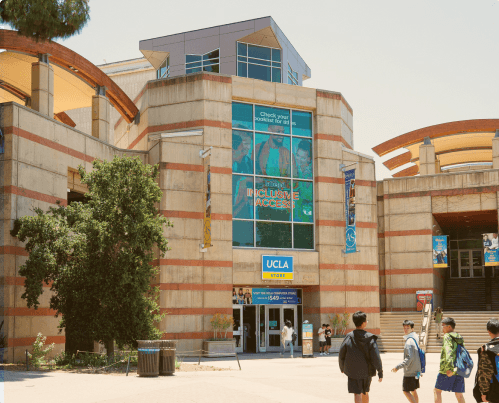
This two-week course for high school students takes place at UCLA in Los Angeles, California. The program is developed by UCLA and offered in partnership with Summer Discovery. Residential and commuter options are available.
A supplemental course fee of $95 applies.
What You Will Do
• Analyze homicide and criminal-investigation case studies
• Examine how DNA testing can identify or exclude possible sources
• Document evidence movement through a defensible chain of custody
• Compare presumptive tests, confirmatory tests and laboratory reporting
• Follow a step-by-step process to document a crime scene and recover evidence
• Evaluate how forensic evidence interacts with law, courts and wrongful convictions
Learning Outcomes
By the end of the course, students will be able to:
• Explain how investigators locate, preserve, test and report physical evidence
• Analyze the importance of DNA, scientific standards and chain of custody
• Apply a structured crime-scene process to a case or evidence-recovery scenario
You’ll leave with experience analyzing cases and documenting evidence and a certificate of completion.
Why Forensic Investigation Skills Matter
Forensic work depends on observation, documentation and disciplined reasoning. Investigators must protect a scene, record what they find and distinguish a presumptive result from a confirmatory test. A weak chain of custody can undermine even strong scientific evidence.
Studying cases also asks students to separate fact, interpretation and legal standard. They practice tracing an argument back to physical evidence, identifying what remains uncertain and explaining why a conclusion is justified. Those habits support work in science, law, research and any field where decisions must withstand careful review.
Who Should Attend?
For students who have completed 9th, 10th, 11th, or 12th grade.
If you’re interested in the science behind an investigation or the questions a lawyer might ask about a result, this course brings those perspectives together. Looking closely at a case means asking what the evidence supports and what remains uncertain.
The course includes serious crimes and mature case material. Careful records, comparison of scientific and legal standards, and explanations of your conclusions are central to the work.
Your Summer at UCLA
UCLA gives high-school students the opportunity to explore an academic interest while experiencing university life in Los Angeles, a city where entertainment, technology, business, science, and culture constantly intersect. The campus has its own community and rhythm while connecting students to a wider environment built around creativity and new ideas.
Students learn alongside peers, navigate a large campus, and gain independence through everyday choices and responsibilities. Time outside class expands the experience through friendships, campus life, and opportunities to notice which subjects and settings hold their attention. For families, UCLA offers a valuable combination of substantive academics, personal growth, and clearer direction about what a student may want to study, experience more deeply, or pursue next.
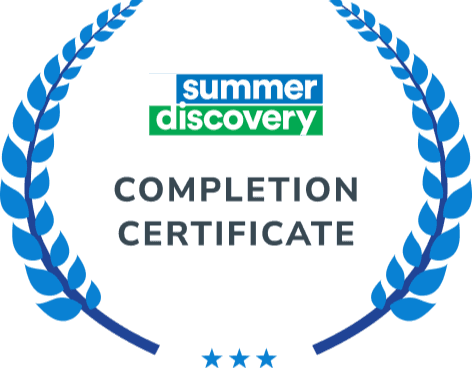
After successfully finishing this course, you will be awarded a certification completion for your accomplishment.
*This is a preview, not what you will receive