
More reasons to enroll early: Save $250 on tuition + 50% off your deposit. Enroll by Oct 31.
Investigate evidence and build a case strategy in this 3-week forensic science program for middle school students at UCLA.
Course Description
A clue can point in more than one direction. Gather evidence and build a case your classmates can investigate.
In this course your student will connect chemistry, physics, biology, and the scientific method with forensic investigation. Experiments, role-play, and cases introduce fingerprints, DNA, blood types, spatter, ballistics, drug residues, fibers, and other traces.
They’ll compare bite marks, try fingerprint methods, and analyze simulated blood. A pickle-stabbing lab explores injury patterns. At small staged scenes, teams collect evidence and review one another’s process.
Their group project turns an investigation into a puzzle for classmates. Students research a case, form a hypothesis, and create a crime scenario to solve. Legal role-play introduces defense, plaintiff, detective, and forensic-scientist perspectives, alongside due process. Final presentations and peer review ask them to explain their reasoning and recognize what the evidence cannot prove.
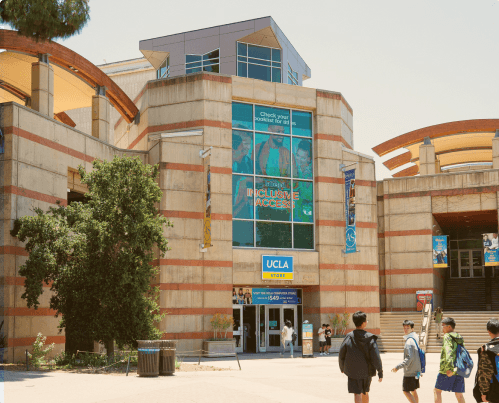
This three-week course for middle school students takes place at UCLA in Los Angeles, California. The program is developed by UCLA and offered in partnership with Summer Discovery. Residential and commuter options are available.
A supplemental course fee of $95 applies.
What You Will Do
• Observe surroundings and classify different types of forensic evidence
• Apply the scientific method to bite-mark and fingerprint investigations
• Analyze simulated blood types, spatter patterns, and injury evidence
• Examine ballistics, trajectory, drug residues, fibers, and trace evidence
• Collect evidence from staged crime scenes and evaluate another team’s process
• Build and present a case project for classmates to investigate
Learning Outcomes
By the end of the course, students will be able to:
• Explain how careful collection and documentation protect simulated evidence
• Use scientific observations to compare possible explanations of a case
• Support a case hypothesis while recognizing evidence limits and legal responsibilities
You’ll leave with your group’s completed case project and a certificate of completion.
Why Forensic Investigation Skills Matter
Forensic investigation depends on careful observation and disciplined reasoning. Evidence can be damaged, contaminated, or misunderstood if it is collected poorly. Even when a test produces a result, investigators must decide what that result supports and what it cannot prove.
Students practice separating observation from assumption, documenting a process, and comparing multiple explanations. Connecting science with legal role-play also shows why technical evidence must be communicated clearly to people with different responsibilities. Those habits strengthen scientific thinking, attention to detail, teamwork, and the ability to defend a conclusion without overstating it.
Who Should Attend?
For students who have completed 6th, 7th, or 8th grade.
For students who enjoy experiments, puzzles, or debating what a clue really shows, this course combines science with investigation. Your student will work with classmates on a continuing case project and reconsider ideas when new evidence appears.
Activities include simulated blood and injury evidence, a pickle-stabbing lab, and fictional crime scenarios. Teams collect evidence carefully and explain their thinking through a case presentation.
Your Summer at UCLA
UCLA gives middle-school students an energetic place to learn, have fun, and experience campus life in Los Angeles. The setting brings together science, technology, creativity, entertainment, and culture, helping new subjects feel connected to a wider world of ideas.
The program combines hands-on academics with friendships, campus activities, clear routines, and support as students become comfortable in a large university environment. Students can try new challenges, share interests with peers, and build confidence through participation without needing to decide where those interests will lead. For families, UCLA offers a structured middle-school experience that balances substantive learning with fun, community, and age-appropriate independence. Students leave with new memories and a clearer sense of what they may want to explore next.
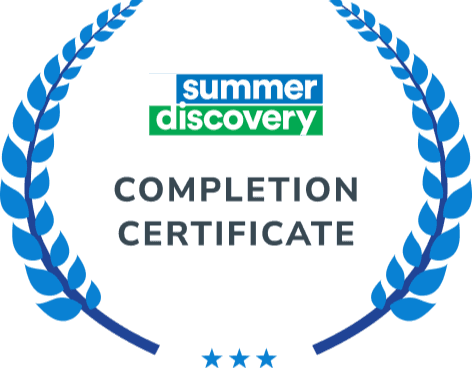
After successfully finishing this course, you will be awarded a certification completion for your accomplishment.
*This is a preview, not what you will receive