
More reasons to enroll early: Save $250 on tuition + 50% off your deposit. Enroll by Oct 31.
Investigate criminal behavior, crime scenes, and profiling in this 2-week program for high school students at UCLA.
Seats are limited, and this course may sell out for summer 2027. Enroll early to save your seat.
Course Description
A pattern in a case can suggest an explanation without proving it. Examine the evidence and compare what different theories reveal about criminal behavior.
In this course you will explore psychodynamic, biological, genetic, social-learning, cognitive, developmental, sociological, and cultural explanations. Cases involving violence, aggression, and substance-related crime connect psychological and environmental influences.
Fictional crime scenes and witness statements bring the theories into an investigation. Examine cognitive distortions, map community crime patterns, and distinguish modus operandi, how an offense is carried out, from signature behavior. Profiling challenges and a Behavioral Analysis Unit simulation ask you to support an interpretation without treating one theory as complete.
Your Criminal Psychology Case File includes a summary, at least three theoretical perspectives, psychological and environmental factors, an offender profile, and prevention or intervention recommendations. Develop it as a report, presentation, or digital portfolio, then give a five-minute evidence-based presentation. Make a clear case while acknowledging what the information cannot establish.
This two-week course for high school students takes place at UCLA in Los Angeles, California. The program is developed by UCLA and offered in partnership with Summer Discovery. Residential and commuter options are available.
What You Will Do
• Compare major psychological, biological, developmental, and social theories of criminal behavior
• Investigate a fictional crime scene using witness statements and behavioral evidence
• Analyze cognitive distortions, environmental risks, violence, and substance-related crime
• Map crime patterns and distinguish modus operandi from signature behavior
• Develop an offender profile with prevention or intervention recommendations
• Create and present an evidence-based Criminal Psychology Case File
Learning Outcomes
By the end of the course, students will be able to:
• Compare psychological, biological, social, and environmental explanations for criminal behavior
• Use behavioral evidence to support a profile while recognizing uncertainty
• Connect prevention or intervention recommendations with case evidence and theory
You’ll leave with your completed Criminal Psychology Case File and a certificate of completion.
Why Criminal Psychology Skills Matter
Criminal psychology requires students to resist simple explanations. Comparing psychodynamic, biological, cognitive, developmental, social-learning, and sociological theories teaches them to ask what each framework explains, where it falls short, and how multiple influences may interact.
Case analysis turns that comparison into disciplined reasoning. Students must separate evidence from assumption, identify behavioral patterns, and justify a profile without claiming more certainty than the information supports. Developing prevention or intervention recommendations adds practical purpose. These habits strengthen critical thinking, media literacy, research, and evidence-based communication in psychology, criminal justice, law, and many other fields.
Who Should Attend?
For students who have completed 9th, 10th, 11th, or 12th grade.
If you enjoy investigating a complicated problem and testing an explanation against evidence, this course offers a way into criminal psychology. Law, public safety, behavioral science, and forensic interests meet in fictional case work.
The course addresses violence, aggression, substance-related crime, and other sensitive topics in a mature academic setting. You’ll join simulations and collaborative case analysis and explain conclusions in a five-minute presentation.
Recommended by More Than 4 out of 5 Students
Based on students surveyed in Summer Discovery’s 2026 UCLA high school program.
Your Summer at UCLA
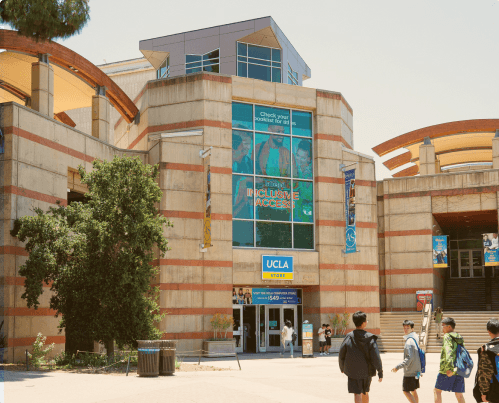
UCLA gives high-school students the opportunity to explore an academic interest while experiencing university life in Los Angeles, a city where entertainment, technology, business, science, and culture constantly intersect. The campus has its own community and rhythm while connecting students to a wider environment built around creativity and new ideas.
Students learn alongside peers, navigate a large campus, and gain independence through everyday choices and responsibilities. Time outside class expands the experience through friendships, campus life, and opportunities to notice which subjects and settings hold their attention. For families, UCLA offers a valuable combination of substantive academics, personal growth, and clearer direction about what a student may want to study, experience more deeply, or pursue next.
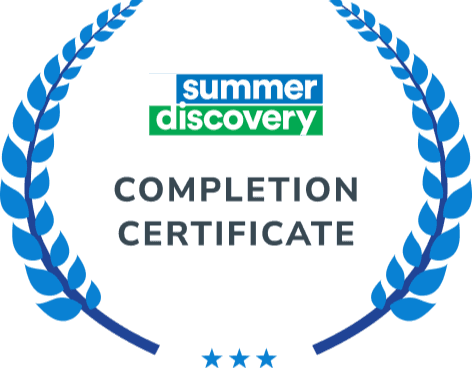
After successfully finishing this course, you will be awarded a certification completion for your accomplishment.
*This is a preview, not what you will receive