
More reasons to enroll early: Save $250 on tuition + 50% off your deposit. Enroll by Oct 31.
Analyze hypothetical cases in this 2-week abnormal psychology program for high school students on UCLA’s campus.
Rated 4.4 out of 5 for classroom experience by students who took this course in 2026.
Course Description
Two patients may share a symptom and still require different diagnoses. Look beyond a single clue and compare the full pattern.
In this course you will examine mood, anxiety, personality, psychotic, trauma-related, eating, and neurocognitive disorders. Cases introduce criteria from DSM-5-TR, a diagnostic manual for mental disorders, and the evidence used to distinguish related conditions.
Differential-diagnosis activities ask you to compare overlapping conditions, including Bipolar I, Bipolar II, and major depressive disorder. Different schools of psychology offer competing explanations of symptoms. Comparing them shows why one plausible story may not settle a case.
A psychological-assessment role-play shows how clinicians gather and interpret information and where diagnosis has limits. Practice holding several possibilities and revising a conclusion when new details emerge. For your capstone, select a fictional or nonfictional character, examine their history and symptoms, and develop an evidence-supported diagnosis in a paper or presentation.
This two-week course takes place at UCLA. The course is available to residential and commuter students. The program is developed by UCLA and offered in partnership with Summer Discovery.
What You Will Do
• Compare major categories of psychological disorders using DSM-5-TR criteria
• Analyze hypothetical clients through individual and group case studies
• Practice differential diagnosis between disorders with overlapping symptoms
• Compare how different schools of psychology explain symptoms
• Explore psychological assessment through a case-based role-play and inventory
• Diagnose a selected character and present an evidence-supported capstone analysis
Learning Outcomes
By the end of the course, students will be able to:
• Differentiate major psychological disorders using symptoms, history and diagnostic criteria
• Compare how several psychological orientations explain symptoms and treatment
• Construct and defend a case-based diagnosis using relevant evidence
You’ll leave with your diagnostic case capstone and a certificate of completion.
Why Clinical Reasoning Skills Matter
Clinical reasoning requires more than matching a symptom to a label. Students must compare evidence, consider competing explanations and recognize how biological, psychological and social factors can shape a person’s experience. That process strengthens careful reading, analytical reasoning and responsible use of evidence.
The course also develops perspective and precision. Comparing therapeutic orientations shows that professionals may interpret the same case differently, while assessment activities reveal why context and measurement matter. These skills support further study in psychology, neuroscience, social work, counseling, public health and related fields.
Who Should Attend?
For students who have completed 9th, 10th, 11th, or 12th grade.
If you want to understand how professionals weigh a complicated psychological case, this course takes you beyond a quick explanation of behavior. You’ll compare evidence, read diagnostic criteria, and consider more than one interpretation.
The course includes sensitive mental-health topics. Cases and role-plays are structured academic exercises; the class does not train you to diagnose people in your own life.
Recommended by More Than 4 out of 5 Students
Based on students surveyed in Summer Discovery’s 2026 UCLA high school program.
Your Summer at UCLA
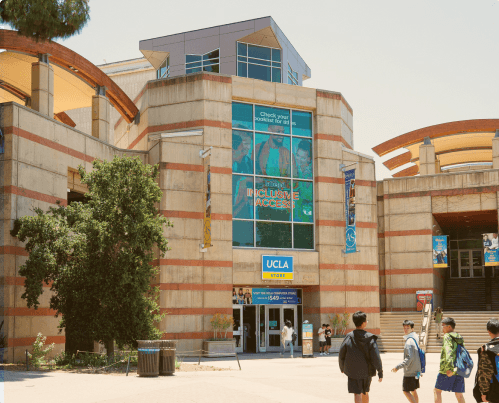
UCLA gives high-school students the opportunity to explore an academic interest while experiencing university life in Los Angeles, a city where entertainment, technology, business, science, and culture constantly intersect. The campus has its own community and rhythm while connecting students to a wider environment built around creativity and new ideas.
Students learn alongside peers, navigate a large campus, and gain independence through everyday choices and responsibilities. Time outside class expands the experience through friendships, campus life, and opportunities to notice which subjects and settings hold their attention. For families, UCLA offers a valuable combination of substantive academics, personal growth, and clearer direction about what a student may want to study, experience more deeply, or pursue next.
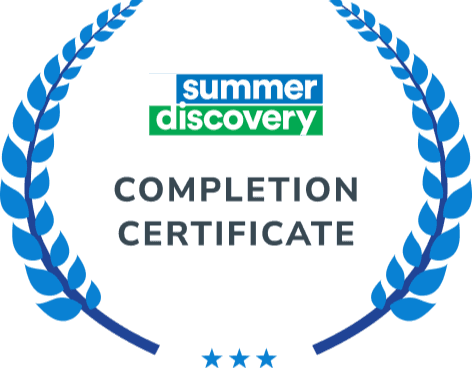
After successfully finishing this course, you will be awarded a certification completion for your accomplishment.
*This is a preview, not what you will receive