

Enroll early for Summer 2027 to secure your preferred campus and program.
Investigate marine life and ocean science in this two-week marine biology and oceanography course for high school students on UC San Diego’s campus.
Course Description
A marine ecosystem is shaped by more than the animals that live in it. Waves, water chemistry, seafloor features, and the ways organisms adapt all help explain what happens beneath the surface.
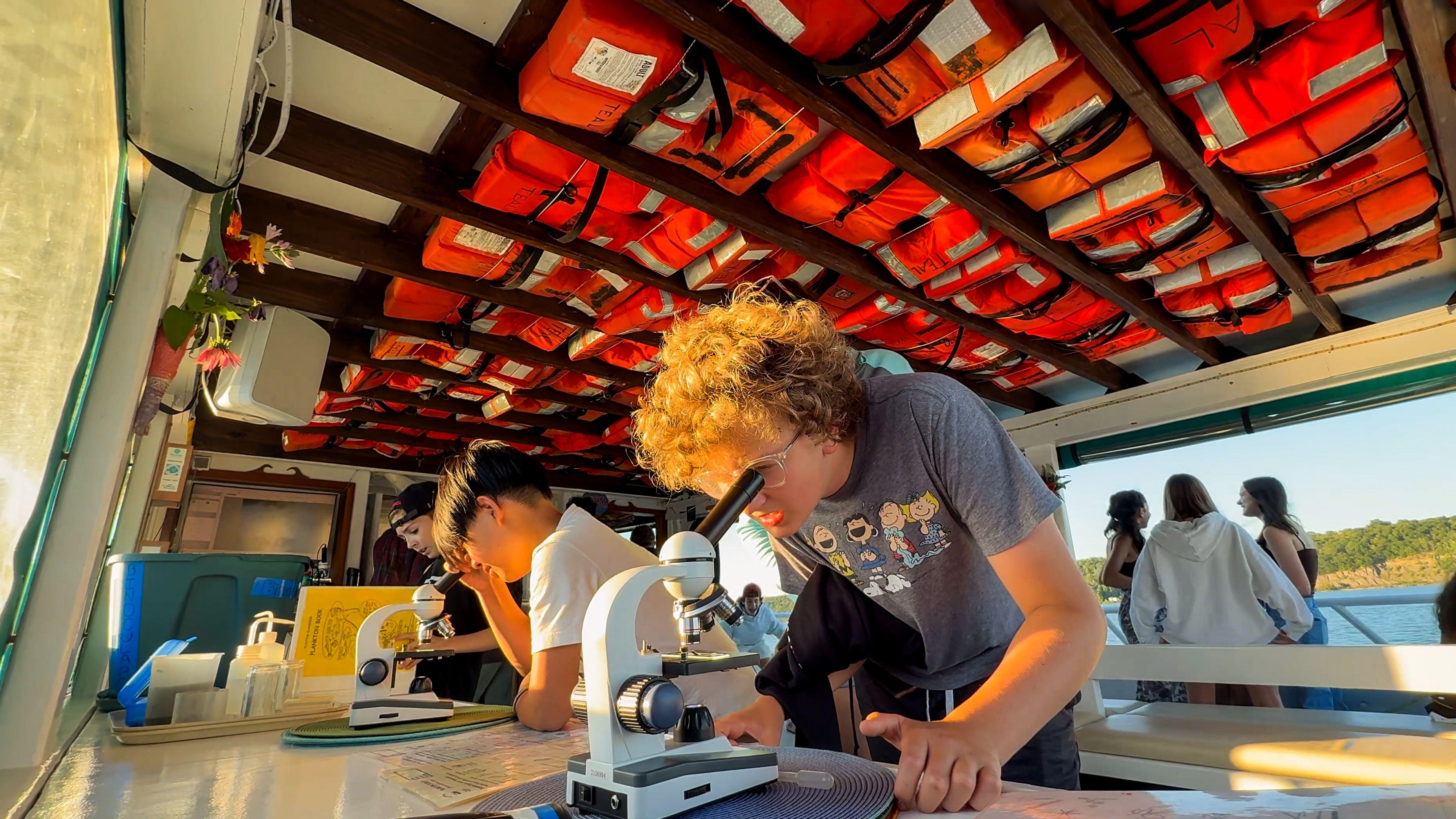
In this course you will investigate ocean science through biology, chemistry, physics, and geology. Examine how marine habitats function, compare the physiological and behavioral adaptations of ocean organisms, and consider how species interact with their environment. Explore how scientific observations can reveal connections among ocean conditions, marine life, and human decisions.
UC San Diego’s coastal setting and the research environment of Scripps Institution of Oceanography provide a starting point for hands-on investigation. The course plan includes experiences at local beaches, laboratories, and the historic Ellen Browning Scripps Memorial Pier, subject to final program arrangements. Connect these planned field experiences with classroom inquiry into marine ecosystems, ocean resources, and conservation.
For your final project, work with classmates to develop an ocean-cleanup solution or a marine-conservation awareness campaign. Choose a challenge, explain the science behind it, and show how your proposal could encourage informed action. This two-week morning Summer Discovery course for high school students takes place on UC San Diego’s campus in La Jolla, California.
What You Will Do
• Investigate how physical, chemical, biological, and geological processes interact in the ocean
• Compare marine organisms and their physiological and behavioral adaptations
• Explore relationships among ocean habitats, species, and changing environmental conditions
• Connect oceanography concepts to planned coastal and marine-research field experiences
• Evaluate resource management and conservation approaches to marine challenges
• Develop and present a solution or awareness campaign for ocean cleanup or marine conservation
Learning Outcomes
By the end of the course, students will be able to:
• Explain how physical, chemical, and biological forces shape marine ecosystems
• Describe how marine organisms adapt to different ocean habitats
• Evaluate marine conservation strategies and propose a science-informed response to a marine challenge
You’ll leave with your team’s ocean-conservation solution or awareness campaign and a clearer understanding of how scientists investigate marine challenges.
Why Marine Science Skills Matter
The ocean is a connected system. Conditions in the water affect organisms, while the ways species live and interact can tell scientists something about the environment around them. Studying these relationships encourages students to look beyond a single observation and consider the evidence from several branches of science.
Conservation adds another question: how can scientific findings guide decisions about shared natural resources? Evaluating proposed responses and explaining a conservation project builds critical thinking, collaboration, and science communication skills useful in biology, environmental science, oceanography, and future research.
Who Should Attend?
For students who have completed 9th, 10th, 11th, or 12th grade.
If you are curious about marine life, coastal environments, or how the ocean works, this course offers a way to explore those questions from several scientific perspectives. Expect investigations of marine habitats and adaptations, discussion of conservation challenges, and a collaborative final project. An interest in hands-on science and careful observation will help you make the most of the experience.
Your Summer at UCSD
UC San Diego’s coastal campus in La Jolla brings together ocean views, landscaped grounds, and an active research university. The Pacific Ocean is nearby, and the setting connects academic exploration with Southern California’s beaches, culture, and creative energy.
Outside class, students can make new friends, take part in campus activities, and experience a different daily routine from home. Shared summer experiences offer room for fun, growing independence, and discovering what it feels like to spend time in a university community.
After successfully finishing this course, you will be awarded a certification completion for your accomplishment.
*This is a preview, not what you will receive