
More reasons to enroll early: Save $250 on tuition + 50% off your deposit. Enroll by Oct 31.
Build and pitch a social venture in this 2-week entrepreneurship program for high school students at UC Berkeley.
Instructors were rated 4.4 out of 5 by students surveyed across the broader program in 2026.
Course Description
A social venture needs to understand the people it aims to help. Start with a community problem and investigate what a new approach could change.
In this course you will examine a major issue affecting communities in the Global South. Identify root causes and gaps in existing solutions before proposing a responsible response.
Your startup team will compare traditional and social-enterprise models, study global cases, and develop an idea around a customer or stakeholder group. Workshops connect research and outreach with sustainable business models, impact measures, budgeting, financing, and storytelling. Fundraising simulations and pitch practice let you test assumptions and answer questions.
Build a social-venture pitch deck covering the issue, solution, business model, marketing and outreach, impact, budget, and financing request. Peer feedback helps your team make a coherent case for action. At Demo Day, present within a time limit and respond to live questions about how it could work.
This two-week full-day academy is part of Summer Discovery at UC Berkeley, held on the university’s campus. Students spend the full program focused on one intensive academy. The academy is available to residential and commuter students.
What You Will Do
• Analyze a social issue through root causes, affected groups, and solution gaps
• Compare traditional startups with mission-driven social venture models
• Research a target customer and shape a locally relevant solution
• Build impact metrics, a budget, and a financing request
• Practice fundraising and Shark Tank-style pitches with peer feedback
• Create and present a complete global social-venture pitch deck
Learning Outcomes
By the end of the course, students will be able to:
• Analyze a global social issue through systems, stakeholders, and existing solution gaps
• Design a sustainable venture model with impact measures, outreach, and financing
• Present an evidence-based social-venture pitch and respond to audience questions
You’ll leave with your team’s social-venture pitch deck and a certificate of completion.
Why Social Entrepreneurship Skills Matter
Social entrepreneurship asks students to hold two demanding questions at once: can an idea create meaningful impact, and can the organization behind it sustain the work? Answering both requires systems thinking, stakeholder research, financial judgment, and clear communication.
Students learn to look beyond symptoms, identify who is affected, and test whether a proposed solution fits the local context. Building a budget and financing request connects purpose to operational reality. Team pitch development also requires negotiation, division of work, feedback, and evidence-based persuasion. These skills are useful in business, nonprofit work, public policy, international development, and any setting where people must align resources around a complex problem.
Who Should Attend?
For students who have completed 9th, 10th, 11th, or 12th grade.
Concern about a global problem can be a starting point for an idea you want to develop with other people. Your startup team will research stakeholder needs, test assumptions, and weigh tradeoffs between funding and impact. The work suits curiosity about business and community change, with a social-venture pitch giving you a chance to explain how the two could connect.
Recommended Program
Based on students surveyed in Summer Discovery’s 2026 UC Berkeley program.
Your Summer at UC Berkeley
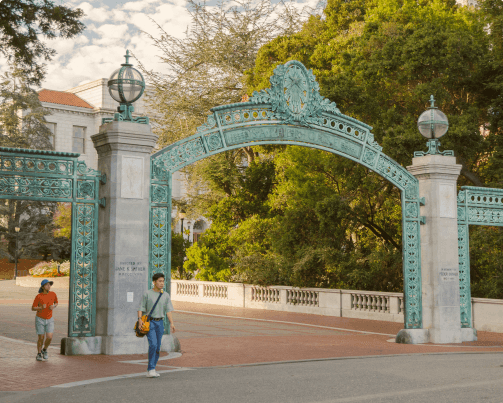
UC Berkeley gives high-school students the opportunity to pursue serious academic exploration in a campus environment shaped by scientific inquiry, new ideas, and an active connection to the wider Bay Area. The Berkeley Hills, distinctive architecture, and green spaces make the experience feel different from an ordinary school routine.
Students learn alongside peers, become more independent, and experience the pace and possibility of university life. The Bay Area context adds exposure to a region influenced by research, technology, entrepreneurship, culture, and public debate. For families, the value is not campus prestige alone. It is the combination of academic depth, community, and a student gaining clearer insight into the subjects, environments, and possible directions that genuinely motivate them.
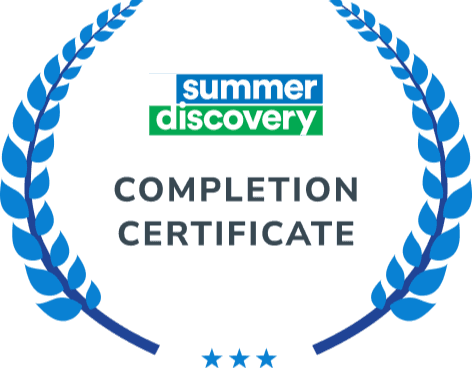
After successfully finishing this course, you will be awarded a certification completion for your accomplishment.
*This is a preview, not what you will receive