
More reasons to enroll early: Save $250 on tuition + 50% off your deposit. Enroll by Oct 31.
Study society through research and sociological inquiry in this 2-week program for high school students on Georgetown University’s campus.
Course Description
A personal choice can be shaped by forces that are easy to overlook. Look at the connections between individual experiences and the families, cultures, and institutions around them.
In this course you will use the sociological imagination to examine those wider patterns. Topics include childhood development, family and social relationships, deviance, race relations, population, sexuality and gender, and large-scale social change. The challenge is to look beyond one person’s story without reducing people to stereotypes.
Research methods give you ways to test an explanation. Compare experiments, surveys, field research, and content analysis, using numbers as well as observations and descriptions. Examine prior research, form a testable hypothesis, and choose what to measure. Validity asks whether a study measures what it claims to; reliability asks whether its results are consistent.
Conduct a short content analysis and develop a simple field-research proposal or project. Considering ethics and using discussion and feedback to refine the work connect your questions with evidence you can responsibly gather and explain. It’s a foundation for further social research.
This two-week course for high school students takes place at Georgetown University in Washington, D.C. The program is developed by Georgetown University and offered in partnership with Summer Discovery. Residential and commuter options are available.
What You Will Do
• Connect personal experiences with wider social patterns
• Compare experiments, surveys, and field-research methods
• Identify ethical questions in social research
• Form a testable hypothesis and choose what to measure
• Look for patterns through a short content analysis
• Design a simple field-research proposal or project
Learning Outcomes
By the end of the course, students will be able to:
• Explain how social structures and culture shape behavior and outcomes
• Compare research methods for a defined sociological question
• Design an ethical study with a testable hypothesis and appropriate evidence
You’ll leave with your content analysis, research design, and a certificate of completion.
Why Sociology Skills Matter
An individual story can reveal something important without explaining a whole social pattern. Sociology helps you connect personal experiences with norms, organizations, and historical conditions while asking what else you need to know.
Designing research makes that question practical: choose measures, consider ethics, and distinguish reliable evidence from an interesting anecdote. Those habits are useful when reading a policy claim, reporting on a community, or planning further academic research.
Who Should Attend?
For students who have completed 9th, 10th, 11th, or 12th grade.
If you notice patterns in how people live or wonder why institutions work the way they do, sociology gives you a way to investigate. Culture, identity, inequality, and social change become questions you can examine through research.
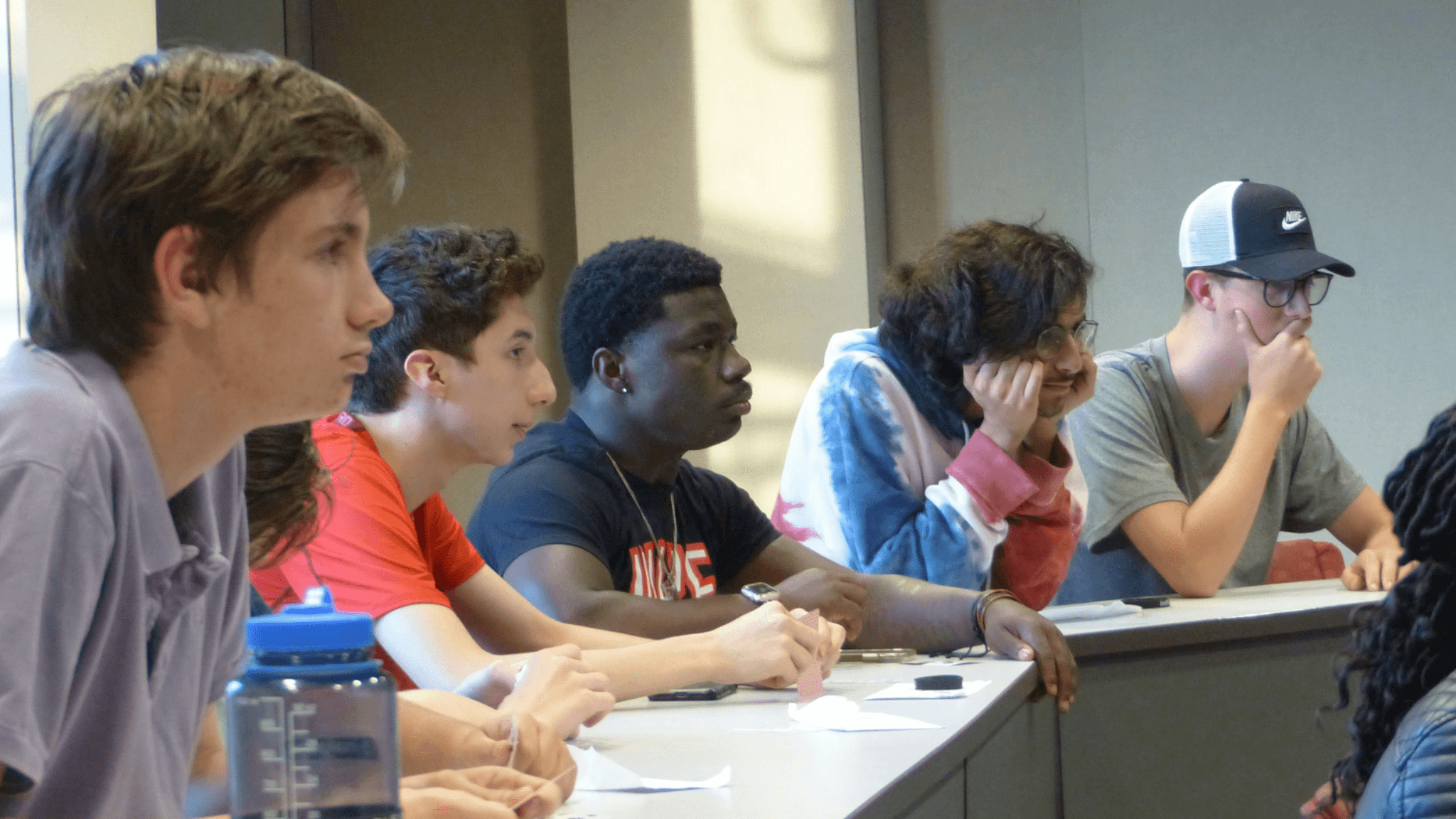
Expect to read studies, compare methods, and discuss complex topics, including race relations, sexuality, and gender. You’ll question assumptions and explain how evidence supports an idea.
Recommended by More Than 4 out of 5 Students
Based on students surveyed in 2026 about Summer Discovery High School programs at Georgetown University campus.
Your Summer at Georgetown University
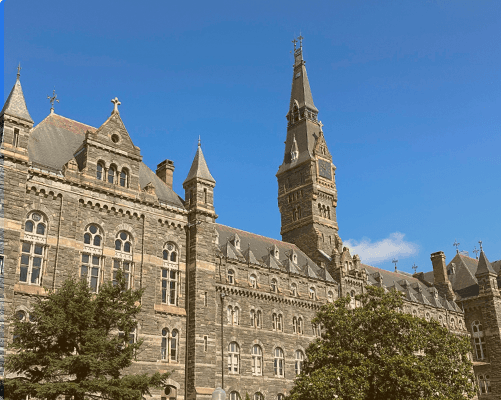
Studying on Georgetown University’s campus gives high-school students the opportunity to explore an academic interest while experiencing campus life in Washington, D.C. Its historic campus and surrounding neighborhood sit near embassies, institutions, and organizations that shape national and international conversations, giving the summer a distinctive sense of place.
Students learn alongside peers with similar interests, navigate a new environment, and gain independence through everyday choices and responsibilities. Time outside class helps students experience the broader rhythm of university life while considering what subjects, communities, and possible directions feel right for them. For families, the program offers a combination of substantive academic exploration, personal growth, and clearer insight into what a student may want to study or pursue next.
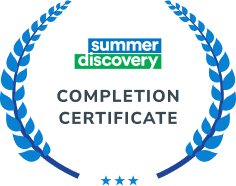
Summer Discovery Certificate of Completion
After successfully finishing this course, you will be awarded a certification completion for your accomplishment.
*This is a preview, not what you will receive