
More reasons to enroll early: Save $250 on tuition + 50% off your deposit. Enroll by Oct 31.
Design a response to a public health challenge in this 2-week program for high school students on Georgetown University’s campus.
Course Description
A clear health message or a prevention plan can reach people long before they need a clinic. Explore how those choices affect a whole community.
In this course you will connect medicine, policy, behavior, and living conditions with population health. Historical and modern cases introduce public health’s purpose and major institutions, showing the difference between treating an individual and improving health across groups.
The course examines pandemics and other public health challenges, including the Spanish flu, sickle cell anemia, and COVID-19. Students connect epidemiology, sanitation, vaccines, immunology, prevention, and intervention to the way health problems are measured and addressed. They also evaluate health messaging and marketing materials for audience, clarity, credibility, and likely effect.
A final project asks students to apply a public health perspective to a real-world problem. They identify an affected population, analyze contributing factors, and propose strategies that may improve health. The project emphasizes evidence, feasible prevention or intervention, and communication that respects the people a solution is meant to serve.
This two-week course takes place at Georgetown University. The course is available to residential and commuter students. The program is developed by Georgetown University and offered in partnership with Summer Discovery.
What You Will Do
• Define public health and distinguish population from individual care
• Examine historical and modern health crises
• Connect epidemiology, sanitation, vaccines, and immunology
• Identify prevention and intervention strategies
• Evaluate health messages for accuracy and audience fit
• Design and present a population-focused public health response
Learning Outcomes
By the end of the course, students will be able to:
• Explain how public health addresses health at the population level
• Evaluate prevention strategies and health communication using evidence
• Develop a feasible intervention proposal for a defined public health problem
You’ll leave with your intervention proposal and a certificate of completion.
Why Public Health Skills Matter
Public health teaches students to look beyond a single diagnosis. Patterns of illness may reflect access, environment, policy, communication, behavior, and other social conditions. Studying those connections helps students understand why effective prevention often requires action across several systems.
Evaluating health messages adds practical media literacy. Students consider whether a message is accurate, understandable, relevant, and appropriate for its intended audience. These skills support informed decisions and future work in medicine, research, policy, communications, or community leadership.
Who Should Attend?
For students who have completed 9th, 10th, 11th, or 12th grade.
If you’re interested in health and in why some communities face greater risks than others, this course brings those questions together. Science, policy, equity, communication, and global issues all have a place in public health. You’ll examine cases and messages with classmates and propose a response grounded in evidence. Discussion includes sensitive health topics and asks you to consider the people a solution is meant to serve.
Recommended by More Than 4 out of 5 Students
Based on students surveyed in 2026 about Summer Discovery High School programs at Georgetown University campus.
Your Summer at Georgetown University
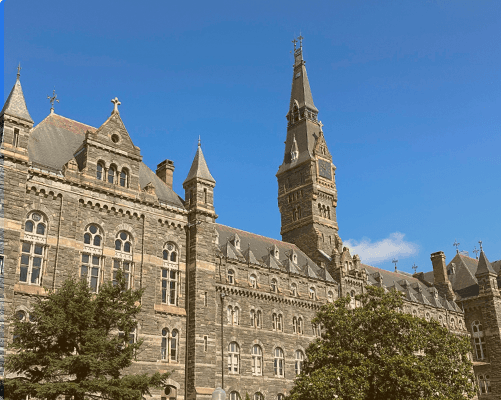
Studying on Georgetown University’s campus gives high-school students the opportunity to explore an academic interest while experiencing campus life in Washington, D.C. Its historic campus and surrounding neighborhood sit near embassies, institutions, and organizations that shape national and international conversations, giving the summer a distinctive sense of place.
Students learn alongside peers with similar interests, navigate a new environment, and gain independence through everyday choices and responsibilities. Time outside class helps students experience the broader rhythm of university life while considering what subjects, communities, and possible directions feel right for them. For families, the program offers a combination of substantive academic exploration, personal growth, and clearer insight into what a student may want to study or pursue next.
After successfully finishing this course, you will be awarded a certification completion for your accomplishment.
*This is a preview, not what you will receive