
More reasons to enroll early: Save $250 on tuition + 50% off your deposit. Enroll by Oct 31.
Investigate fear in the brain and media in this three-week psychology course for elementary and middle school students on Cornell University’s campus.
Rated 4.5 out of 5 for course experience by students surveyed across the broader program in 2026.
Course Description
A movie scene can make you tense even when you know it’s fiction. The brain, the body, and the way a story is told all help explain that reaction.
You’ll investigate how fear alerts people to threats and influences their decisions. Diagram the brain’s fear response, compare fear with anxiety and phobias, and use case studies to examine how people react. Role-plays and discussions explore the choices people make under pressure. Looking at another person’s response also raises questions about empathy: the same situation can feel very different to different people.
Media gives the class another place to investigate. Analyze film clips, stories, news, and social media to identify techniques that build tension or shape an audience’s interpretation. Debate the responsibilities of people who use fear to persuade others. For your capstone, choose a form of media and study how it portrays fear across a century. Research examples, compare styles and audience reactions, and consider the social context behind them. Present your findings creatively, using specific examples to explain what changed and what stayed familiar.
This three-week course for elementary and middle school students is part of Summer Discovery’s Institute for the Gifted program on Cornell University’s campus in Ithaca, New York. Beyond class, students connect active academic exploration with campus life, new friendships, growing independence, and curiosity they can keep exploring.
What You Will Do
• Diagram the brain and body processes involved in a fear response
• Compare fear, anxiety, and phobias through research and discussion
• Analyze case studies of fear’s influence on behavior and decisions
• Explore empathy and coping strategies through structured scenarios and role-plays
• Debate the ethical use of fear in media and communication
• Research and present a century of fear portrayals in a chosen form of media
Learning Outcomes
By the end of the course, students will be able to:
• Explain connections between the brain, body, and experience of fear
• Analyze how fear can influence a decision or interpretation of media
• Present an evidence-supported comparison of fear portrayals across time
You’ll leave with your media-analysis capstone and new ways to explore psychology, storytelling, and the messages you encounter every day.
Why Psychology Skills Matter
Studying fear asks students to examine a reaction rather than assume everyone experiences it in the same way. Comparing case studies, discussing different interpretations, and considering social context help them look beyond an immediate judgment. That work encourages careful observation and empathy.
Media analysis adds another layer. Students identify how an image, a character’s behavior, or a message shapes an audience’s response, then support their interpretation with examples. These habits can help with reading, discussion, and evaluating information online. Learning about coping strategies also gives students language for discussing responses to everyday challenges without treating the course as clinical training.
Is This Course Right for You?
For students who have completed 5th, 6th, 7th, or 8th grade.
This course may interest you if you enjoy psychology, storytelling, or asking why people react differently to the same situation. You’ll research examples, discuss case studies, try structured scenarios, and create a presentation. Students should be ready to listen respectfully and support an interpretation with evidence. The curriculum includes selected scary media, phobias, and historical events; these are topics for academic analysis and discussion.
Institute for the Gifted eligibility requirements apply; see the program FAQ. A completed program application is required.
Recommended by More Than 4 out of 5 Students
Based on students surveyed in Summer Discovery’s 2026 Cornell program.
Your Summer at Cornell
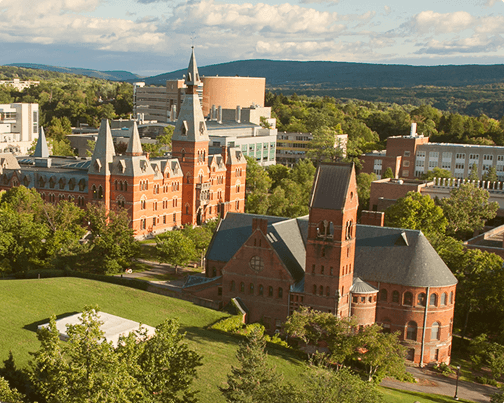
Cornell’s Ithaca setting gives elementary and middle school students an adventurous first experience of campus life, surrounded by Finger Lakes gorges, waterfalls, and a landscape shaped by research, agriculture, and invention. The setting makes learning feel different from an ordinary school day and gives students plenty to notice and explore.
The program combines active academics with friendships, campus activities, clear routines, and support as students become more comfortable in a new environment. Students can try challenging ideas, share interests with peers, and enjoy the fun of living and learning on a university campus. For families, Cornell offers a structured middle-school experience that balances learning and discovery with community, support, and growing independence.
Psychology in Action
A filmmaker can use sound, timing, and a character’s reactions to create suspense. A public message can use fear to draw attention to a risk. Psychologists ask how people interpret those signals and why an experience that feels threatening to one person may affect someone else differently.
The course brings those questions together through media examples, case studies, and a historical capstone. Students can continue exploring psychology, analyze the choices in a favorite story, or examine how an online message tries to influence its audience. Each direction involves noticing a response and asking what helped create it.
After successfully finishing this course, you will be awarded a certification completion for your accomplishment.
*This is a preview, not what you will receive