
More reasons to enroll early: Save $250 on tuition + 50% off your deposit. Enroll by Oct 31.
Investigate simulated cases in this three-week clinical medicine course for elementary and middle school students on Cornell University’s campus.
Course Description
A racing heart and shortness of breath could point to several causes. Ask a useful question, check the evidence, and decide what would help narrow the possibilities.
You’ll work through simulated medical cases using paper records, printed data, models, and diagrams. Interview a mock patient, read heart rhythm strips, and connect symptoms with how the body works. Cases involving sickle cell disease, stroke, and medication safety take you from an organ’s function to the genes, cells, or brain regions involved. Calculations become part of the investigation as you explore medicine doses, test results, and the spread of a simulated outbreak.
A case portfolio records possible diagnoses and the reasoning behind them. Discussions about scarce treatments and AI-generated diagnoses ask you to consider the strength of a claim and the fairness of a decision. For the final Grand Rounds presentation, explain a complete case, compare the evidence, propose a treatment plan, and respond to classmates’ questions. All activities take place in a standard classroom; there are no laboratory procedures or biological materials.
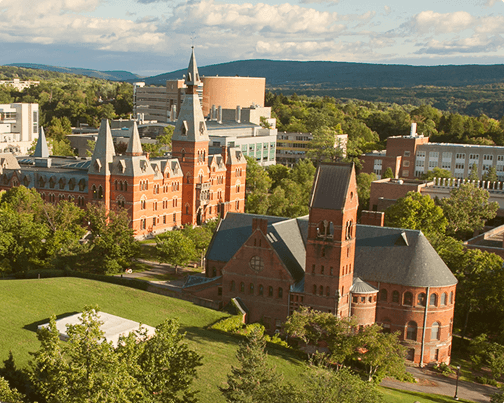
This three-week course for elementary and middle school students is part of Summer Discovery’s Institute for the Gifted program on Cornell University’s campus in Ithaca, New York. Residential and commuter options are available. Beyond class, students connect academic exploration with campus life, new friendships, and curiosity they can keep exploring.
What You Will Do
• Interview a mock patient and write a clinical note
• Read heart rhythm strips and connect them with heart and lung function
• Trace a gene change to the symptoms of sickle cell disease
• Calculate medicine doses and model how a drug leaves the body
• Investigate a simulated outbreak and compare evidence from medical tests
• Present and defend a complete simulated case at Grand Rounds
Learning Outcomes
By the end of the course, students will be able to:
• Rank possible diagnoses using evidence from a simulated patient’s history and test results
• Explain connections between a disease and the genes, cells, organs, or communities involved
• Evaluate a medical claim and defend a conclusion using relevant evidence
You’ll leave with your case portfolio, Grand Rounds presentation, and certificate of completion, with new questions about medicine and science to explore.
Why Clinical Reasoning Skills Matter
A positive test doesn’t always mean a patient has a disease, and one symptom can have several explanations. Working through a simulated case asks students to compare possibilities, judge how much a result tells them, and change a conclusion when new information appears.
Those habits reach beyond medicine. Students practice asking what the evidence supports and explaining why one interpretation is stronger than another. Questions about access, cost, and fairness show how a decision can involve more than a correct calculation. Presenting a case to classmates brings the reasoning into the open, where other people can examine and question it.
Is This Course Right for You?
For students who have completed 5th, 6th, 7th, or 8th grade.
If you enjoy science, puzzles, or figuring out what’s happening inside the body, this course offers a closer look at medical reasoning. You’ll work with classmates, use math to investigate cases, and explain a conclusion you can defend. The cases are simulated academic exercises in a standard classroom. Students don’t work with real patients or biological materials.
Institute for the Gifted eligibility requirements apply; see the program FAQ. A completed program application is required.
Clinical Reasoning in Action
Medical reasoning can connect a patient’s symptoms with questions at very different scales. A clinician might compare possible causes of chest pain, a laboratory researcher might investigate a gene change, and a public-health team might study the pattern of an outbreak. Each needs evidence suited to the question being asked.
The course introduces those connections through simulated cases and printed data. A Grand Rounds presentation also shows how medical teams discuss a case and question an explanation. Students can use the experience to identify which parts of biology, mathematics, health, or ethical decision-making they would like to investigate further.
After successfully finishing this course, you will be awarded a certification completion for your accomplishment.
*This is a preview, not what you will receive